
Bloodfin Tetra
Aphyocharax anisitsi
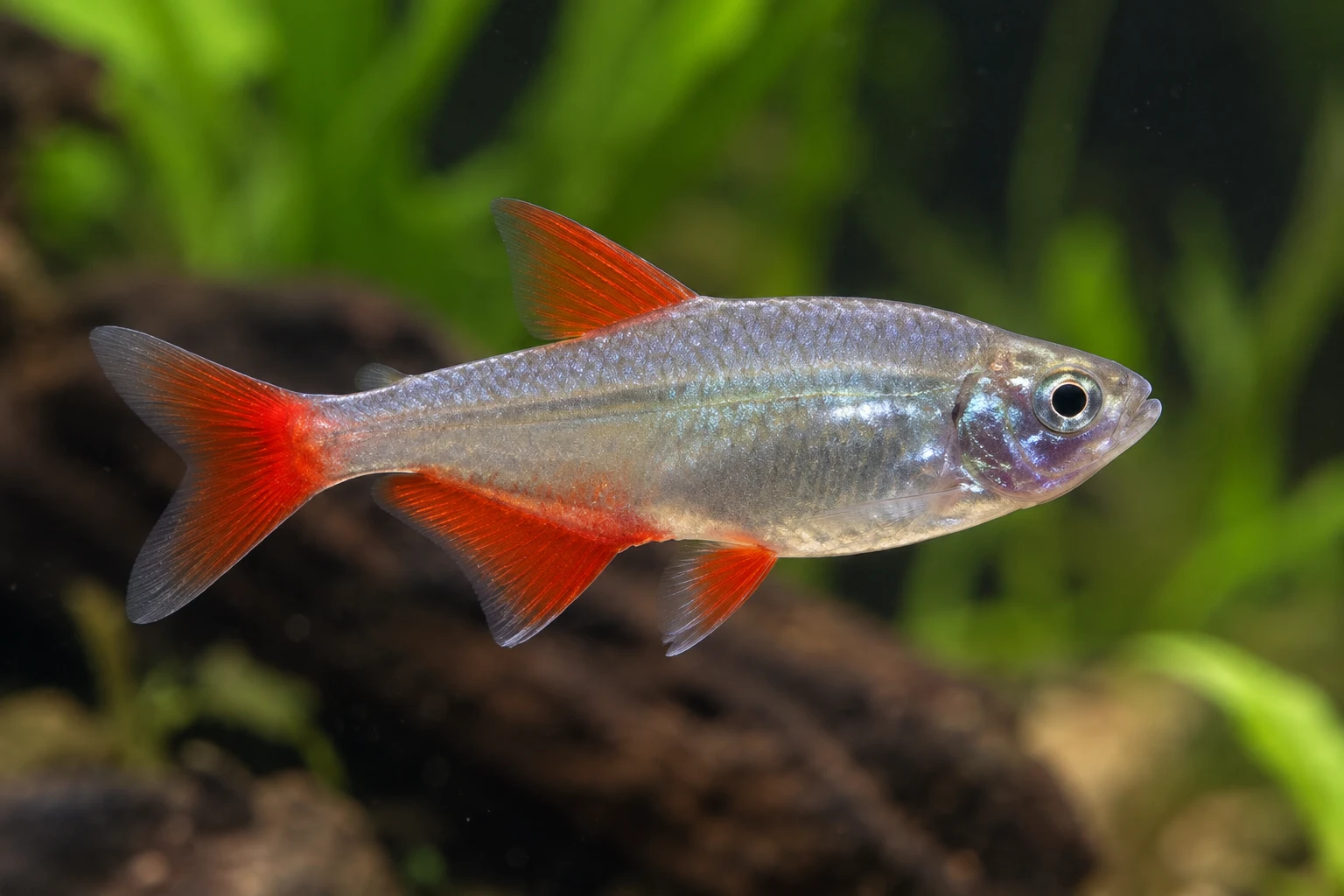
A lively, silver-bodied schooling tetra recognised by its vivid red fins and energetic swimming behaviour.
Difficulty
Beginner
Min tank size
75 L / 20 gal
Temperament
Peaceful, active
Diet type
Omnivore
Adult size
4–5 cm / 1.6–2 in
Lifespan
5–8 years
Water type
Freshwater
Bloodfin tetra at a glance
| Scientific name | Aphyocharax anisitsi |
|---|---|
| Order | Characiformes |
| Family | Aphyocharacidae |
| Genus | Aphyocharax |
| Origin | South America — Paraná and Uruguay river systems |
| Adult size | About 4–5 cm (1.6–2 in) |
| Tank size (min) | 75 L / 20 gal for a proper school; a longer footprint is preferred |
| Temperature | 20–26 °C (68–79 °F) |
| pH range | 6.0–8.0 |
| Water hardness | Soft to moderately hard |
| Diet | Omnivore — flakes, micro-pellets, frozen and live foods |
| Temperament | Peaceful, energetic schooling fish |
| Care level | Beginner |
Overview
The bloodfin tetra (Aphyocharax anisitsi) is a small South American characin valued in the aquarium hobby for its bright red fins, silvery body and active schooling behaviour. It spends much of its time cruising through the middle levels of the aquarium and looks especially striking against green plants and darker backgrounds.
Bloodfin tetras are generally hardy and peaceful, making them a good choice for an established community aquarium. Their main requirement is room to swim: unlike very sedentary nano tetras, they are energetic fish that benefit from a longer aquarium and the security of a proper group.
Bloodfin tetra size & lifespan
How big do bloodfin tetras get?
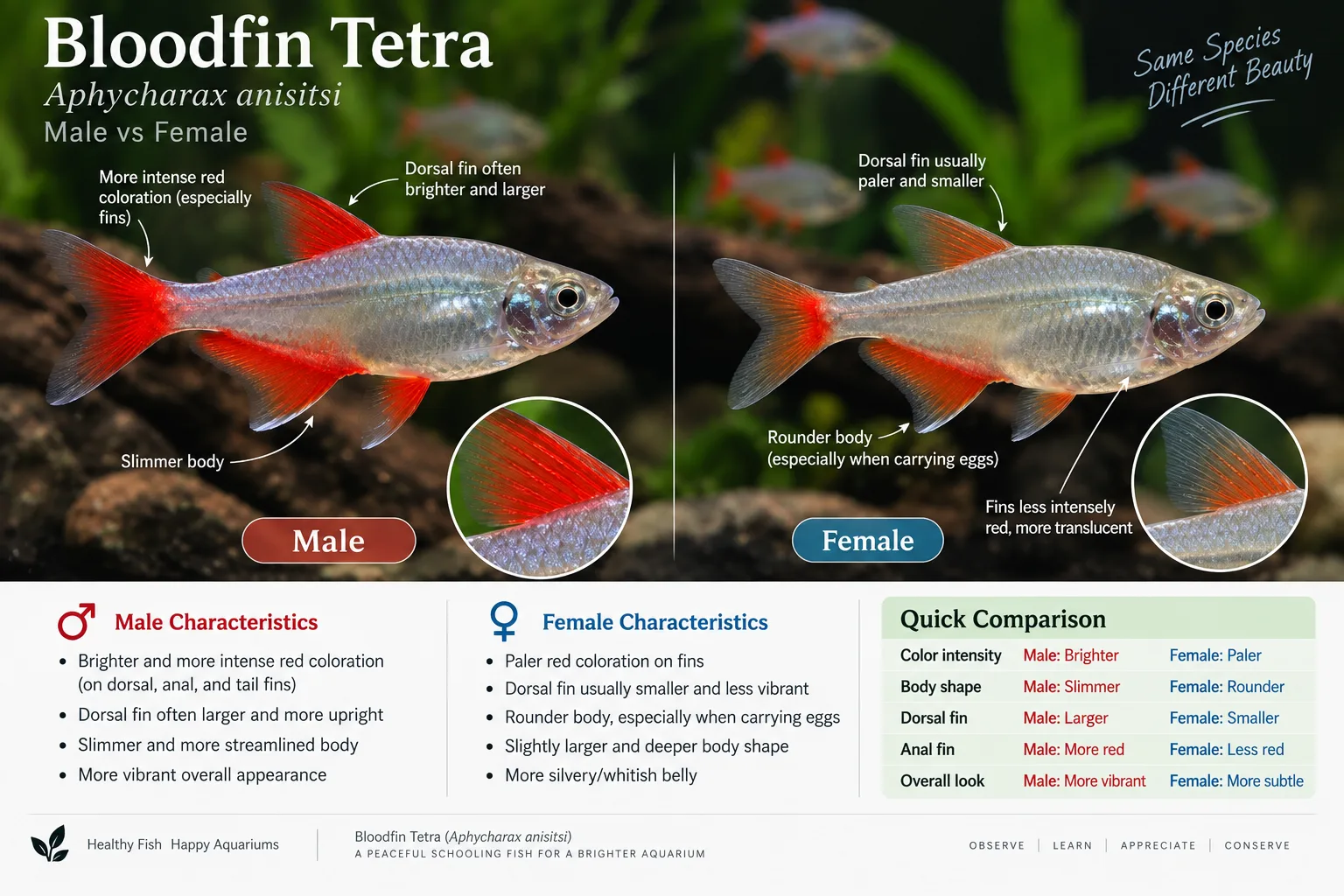
Adults generally reach around 4–5 cm (1.6–2 inches). Females can appear deeper-bodied than males, while mature males are usually slimmer and may show strong red fin colour when healthy and settled.
How long do bloodfin tetras live?
A well-kept bloodfin tetra can live roughly 5–8 years. Good filtration, regular water changes, a varied diet and enough swimming room are more important than trying to force a particular temperature.
Natural habitat & origin
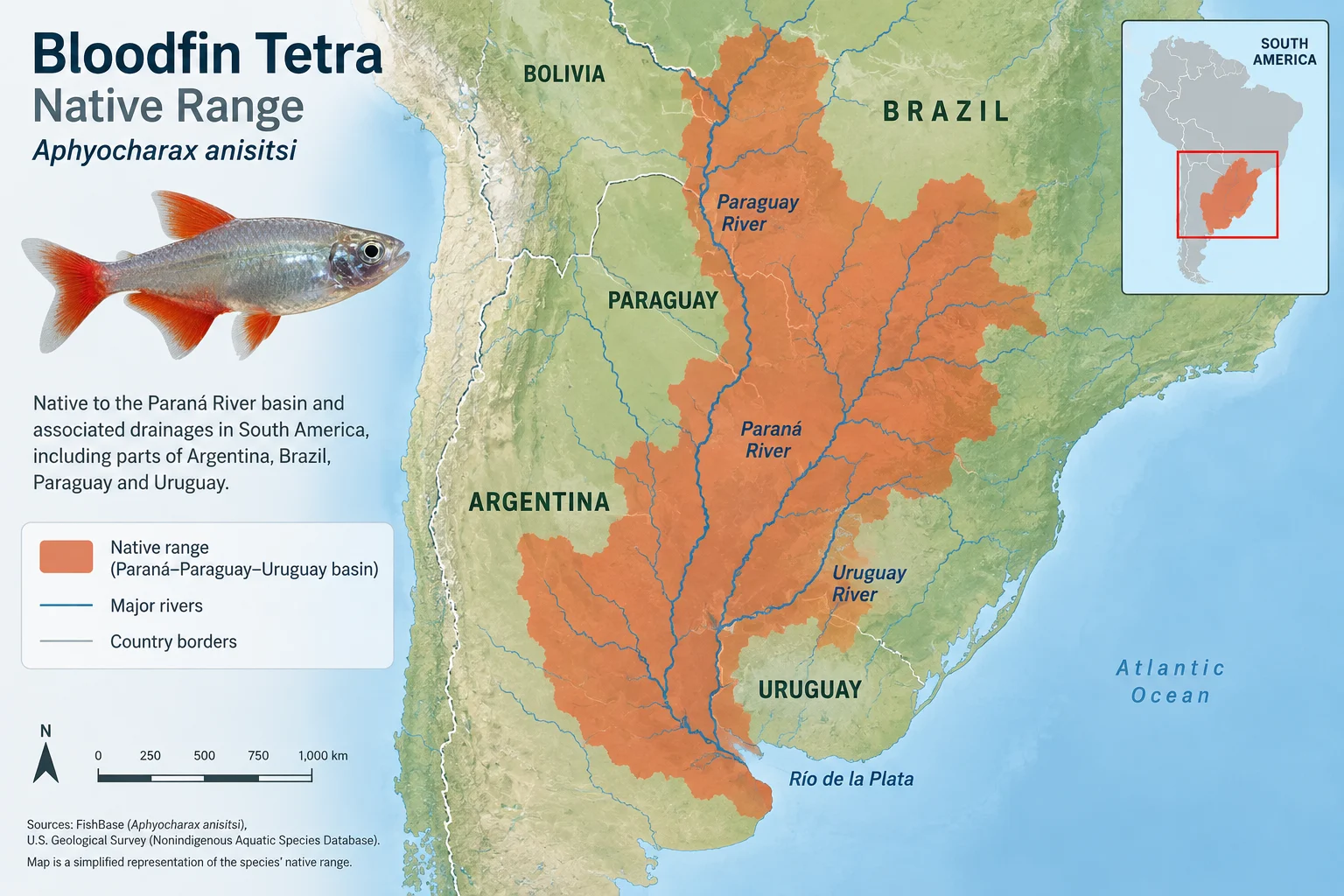
Aphyocharax anisitsi is native to freshwater systems of southern South America, particularly the Paraná and Uruguay drainage regions. Wild populations are associated with flowing and still waters where vegetation, submerged structure and open swimming areas provide both cover and feeding opportunities.
Aquarium specimens are commonly captive-bred. Recreating the exact appearance of a wild habitat is not essential, but a planted aquarium with open swimming lanes, moderate circulation and shaded areas provides a useful approximation of the conditions these active fish appreciate.
Bloodfin tetra tank size & requirements
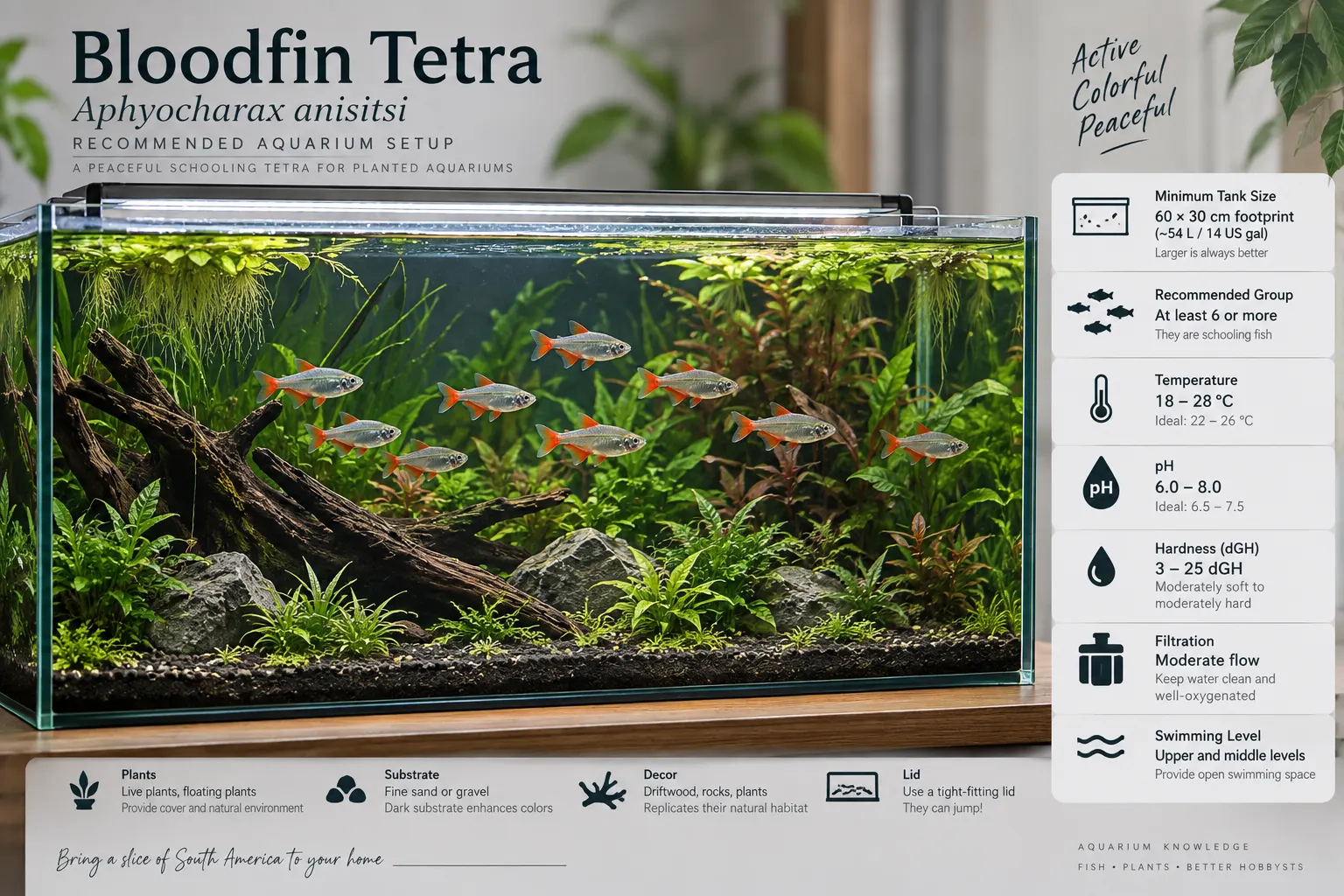
A 20-gallon (75 L) long-style aquarium is a sensible minimum for a school of bloodfin tetras. The long footprint matters because these fish are active, open-water swimmers. A tight-fitting lid is also recommended because healthy tetras can jump when startled.
How many bloodfin tetras in a 10 or 20 gallon tank?
A 10-gallon aquarium is generally too restrictive for a proper long-term school. In a 20-gallon tank, start with a school of about six to eight and leave additional stocking room for other community fish. Larger aquariums can support a bigger, more natural-looking group.
| 5 gal (19 L) | Not recommended — too small for a proper bloodfin tetra school. |
|---|---|
| 10 gal (38 L) | Not recommended as a long-term home for a full school; bloodfin tetras are active swimmers. |
| 20 gal (75 L) | A practical minimum for a school of 6–8, preferably in a longer aquarium. |
| 29 gal (110 L) | 8–12 bloodfin tetras, with room for compatible peaceful tankmates. |
| 55 gal (208 L) | A larger school of 12–20 can work well, with substantial swimming space and compatible community fish. |
Water parameters
| Temperature | 20–26 °C (68–79 °F) |
|---|---|
| pH | 6.0–8.0 |
| Hardness (GH) | Soft to moderately hard |
| Filtration turnover | Moderate circulation with good oxygenation |
Use fine gravel or sand, live plants around the rear and sides, and an open central swimming lane. Moderate filtration with good oxygenation works well. Keep water stable and perform regular partial water changes rather than making large, abrupt changes to chemistry.
Not sure how many litres your tank holds? Check it with theaquarium volume calculator.
What do bloodfin tetras eat? Diet & feeding
Bloodfin tetras are omnivores and readily accept quality aquarium foods. Use a good tropical flake, small pellet or micro-pellet as the everyday staple, then rotate in frozen or live foods such as daphnia, brine shrimp and bloodworms for variety.
Feed small portions once or twice daily and offer only what the school can finish in roughly two minutes. Their active swimming makes them enthusiastic feeders, but overfeeding can quickly reduce water quality.
Bloodfin tetra tank mates & compatibility
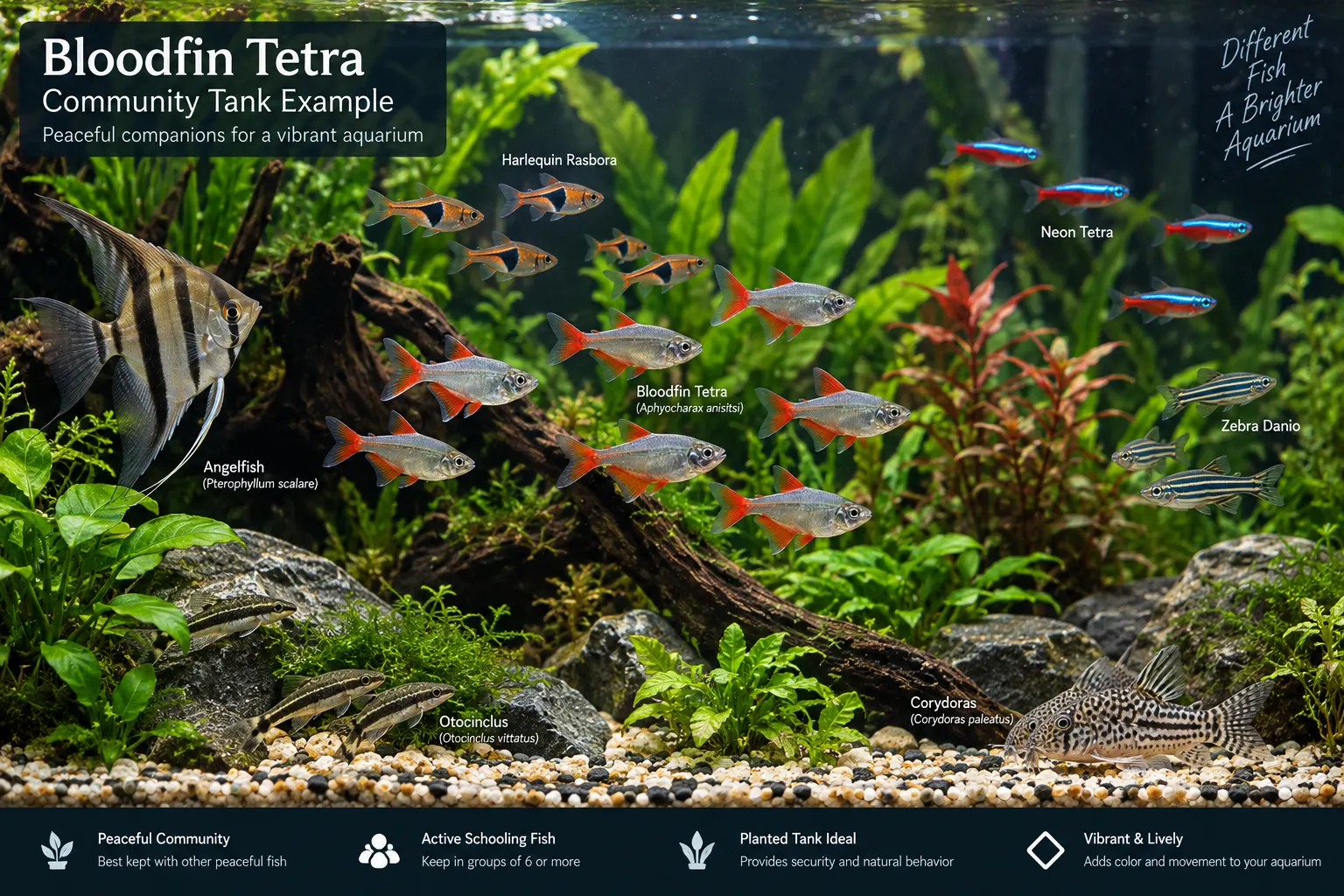
Keep bloodfin tetras in a group of at least six, with a larger school often looking more natural. They are peaceful but fast-moving, so tankmates should tolerate activity rather than being easily intimidated by constant movement.
Are bloodfin tetras aggressive? Usually no. Brief chasing and sparring within the school is normal social behaviour. Problems are more likely when the group is too small, the aquarium is cramped, or tankmates are unusually slow or delicate.
Good bloodfin tetra tank mates
- Other peaceful characins of similar size and temperament
- Harlequin and other peaceful rasboras with overlapping water requirements
- Corydoras catfish suited to the same temperature range
- Peaceful dwarf cichlids where the aquarium is large enough and territories are managed
- Kuhli loaches and other peaceful bottom-dwelling community fish
- Small to medium peaceful livebearers when water chemistry overlaps
- Other active community fish that are not excessively slow or long-finned
Avoid
- Large predatory fish that can swallow adult bloodfin tetras
- Highly aggressive or territorial cichlids
- Very slow, delicate fish that may be stressed by constant schooling activity
- Tiny shrimp and newly hatched fry, which may be eaten
How to breed bloodfin tetras
Bloodfin tetras are egg-scattering fish. For a dedicated breeding attempt, condition a group with high-quality foods, then move selected adults to a separate spawning aquarium with gentle aeration, subdued light and fine-leaved plants or a spawning mop.
Spawning may occur among the plants, with eggs scattered over the spawning material. Remove the adults after spawning because they can eat the eggs. Once the eggs hatch, the fry are tiny and need appropriately sized first foods before progressing to newly hatched brine shrimp and other larger foods as they grow.
Naming & buyer’s notes
Bloodfin tetra is a common aquarium name, but identification is easiest when the fish is sold under its scientific name, Aphyocharax anisitsi. Look for a healthy, active school with clear eyes, intact fins and strong, even colouration rather than choosing fish solely by the intensity of the red fins.
Look for an active school
Healthy bloodfin tetras should swim confidently, respond to food and show coordinated schooling behaviour rather than hiding continuously.
Check the fins
The characteristic red fins should be intact. Frayed fins, pale colouration, clamped fins or persistent lethargy are reasons to pass on a group.
School size matters
A group of six is a useful minimum, but a larger group usually gives this active species more natural behaviour and makes individual chasing less noticeable.
Bloodfin tetra FAQ
- How big do bloodfin tetras get?
- Bloodfin tetras typically reach about 4–5 cm (1.6–2 inches) as adults. Females are often a little deeper-bodied, especially when carrying eggs, while males tend to look slimmer.
- How long do bloodfin tetras live?
- Bloodfin tetras commonly live around 5–8 years in a well-maintained aquarium. Stable water quality, a varied diet, adequate swimming space and a proper school all help them reach their potential lifespan.
- How many bloodfin tetras should be kept together?
- Keep at least six bloodfin tetras together, with eight or more often producing more natural schooling behaviour. They are active shoaling fish and generally behave more confidently in a group.
- What size tank do bloodfin tetras need?
- A 20-gallon (75 L) aquarium is a practical minimum for a proper school, particularly because bloodfin tetras are active swimmers. A longer aquarium is preferable to a tall, narrow one.
- What do bloodfin tetras eat?
- Bloodfin tetras are omnivores. Use a quality tropical flake or small pellet as the staple and supplement it with frozen or live foods such as daphnia, brine shrimp and bloodworms. Feed small portions once or twice daily.
- Are bloodfin tetras aggressive?
- They are generally peaceful community fish, but they are energetic and may occasionally chase or spar with one another. Keeping a sufficiently large school helps spread this behaviour and reduces the chance of one fish being singled out.
- Do bloodfin tetras need a heater?
- They can tolerate a fairly broad temperature range, but stability is more important than chasing an exact number. A heater is useful when the room temperature regularly falls below the preferred aquarium range.
- Can bloodfin tetras live with other tetras?
- Yes. They can work well with similarly sized peaceful tetras and other community fish when the aquarium provides enough swimming space. Avoid combining them with aggressive species or extremely slow, delicate fish.
- How do you breed bloodfin tetras?
- Bloodfin tetras are egg-scatterers. Condition males and females with varied foods, then move them to a separate spawning aquarium with fine-leaved plants or a spawning mop. Adults may eat eggs, so remove the parents after spawning and raise the fry separately.