
Bleeding Heart Tetra
Hyphessobrycon erythrostigma
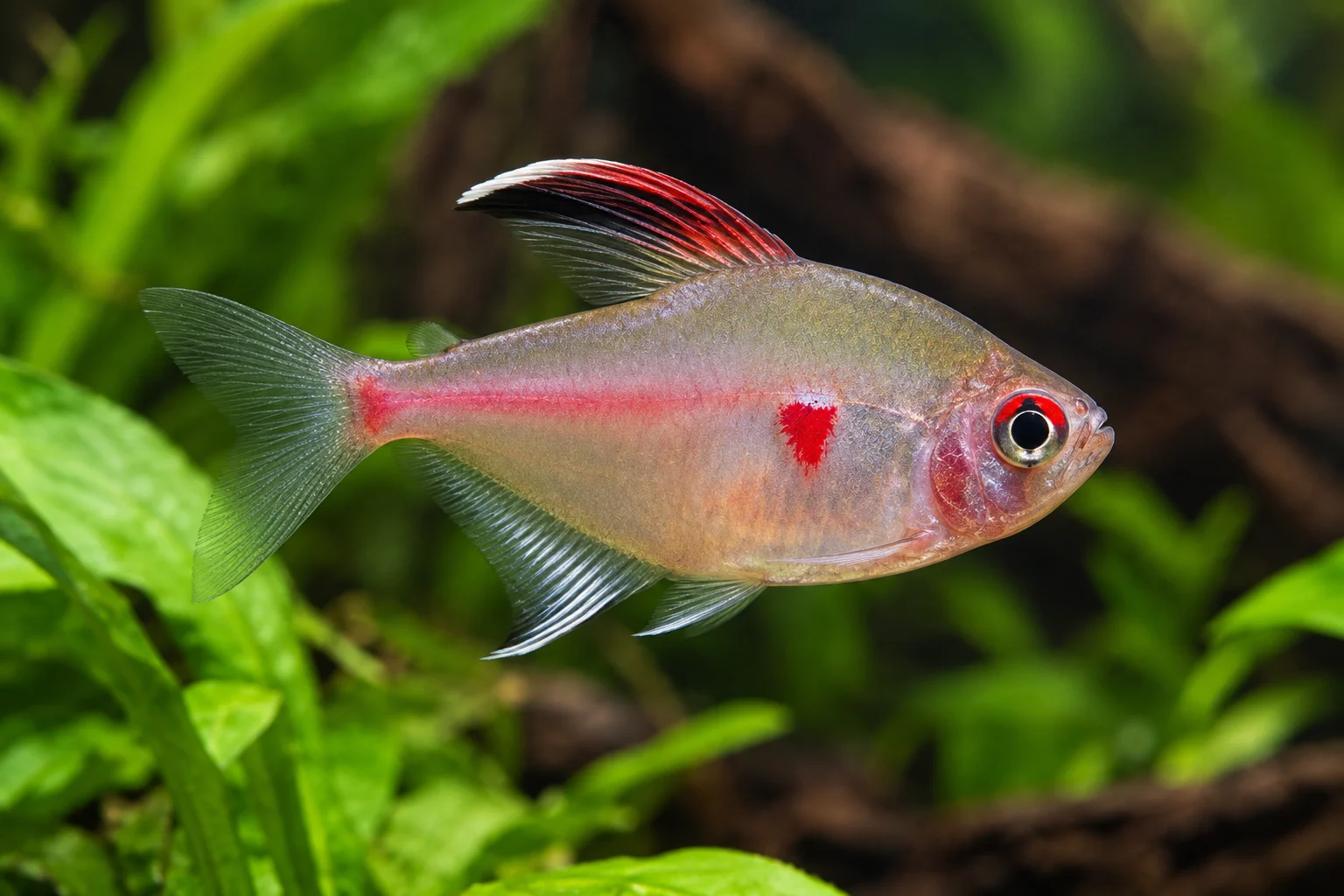
A striking South American schooling tetra known for its silver body, vivid red heart-shaped mark and peaceful community behaviour.
Difficulty
Beginner
Min tank size
38 L / 10 gal
Temperament
Peaceful, active
Diet type
Omnivore
Adult size
5–6 cm / 2–2.4 in
Lifespan
5–7 years
Water type
Freshwater
Black skirt tetra at a glance
| Scientific name | Hyphessobrycon erythrostigma |
|---|---|
| Alternative name | Black widow tetra |
| Order | Characiformes |
| Family | Characidae (characins) |
| Genus | Gymnocorymbus |
| Origin | South America — upper Amazon basin regions |
| Adult size | About 5–6 cm (2–2.4 in) |
| Tank size (min) | 38 L / 10 gal; 75 L / 20 gal long is better for a school |
| Temperature | 22–27 °C (72–81 °F) |
| pH range | 6.0–7.5 |
| Water hardness | Soft to moderately hard |
| Diet | Omnivore — flakes, micro-pellets, frozen and live foods |
| Temperament | Peaceful schooling fish; active and occasionally displayful |
| Care level | Beginner |
Overview
The bleeding heart tetra (Hyphessobrycon erythrostigma), also called the black widow tetra, is a small freshwater characin recognised by its silvery body, distinctive reddish patch near the heart and dark markings on the dorsal and anal fins. It is a long-established aquarium fish and remains popular because it is hardy, active and easy to feed.
Bleeding heart tetras are schooling community fish that look especially effective in planted aquariums with open midwater swimming space. They are generally peaceful, although their active social behaviour means they are best kept with other appropriately sized fish that can tolerate their energy level.
Black skirt tetra size & lifespan
How big do bleeding heart tetras get?
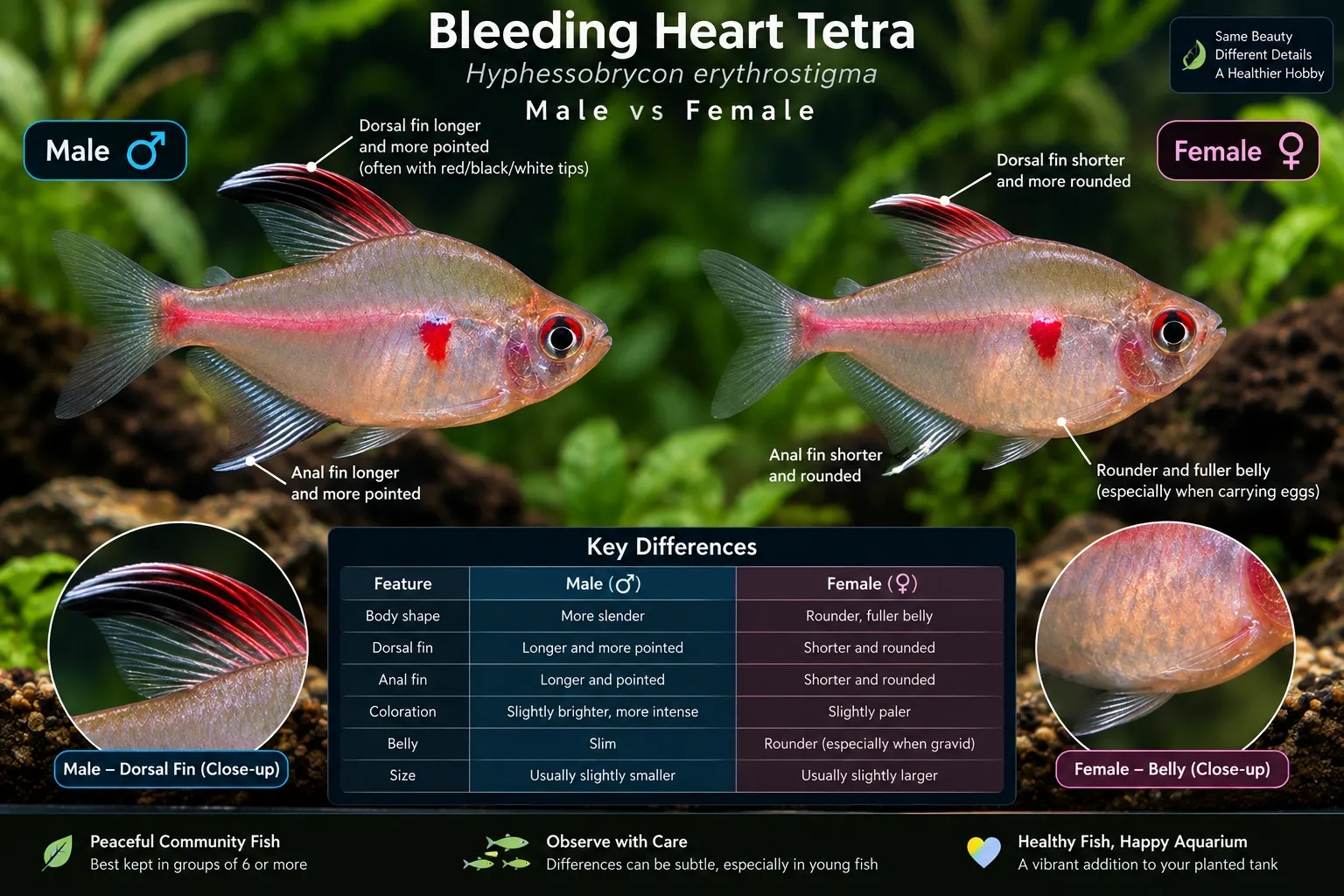
Adult bleeding heart tetras generally reach about 5–6 cm (2–2.4 in). Females often develop a fuller abdomen, particularly when mature and carrying eggs, while males tend to be slimmer and can show more elongated fins.
How long do bleeding heart tetras live?
A typical aquarium lifespan is around 5–7 years when the fish receive stable water conditions, good nutrition, adequate swimming space and a proper social group. Chronic stress and poor water quality can significantly reduce longevity.
Natural habitat & origin
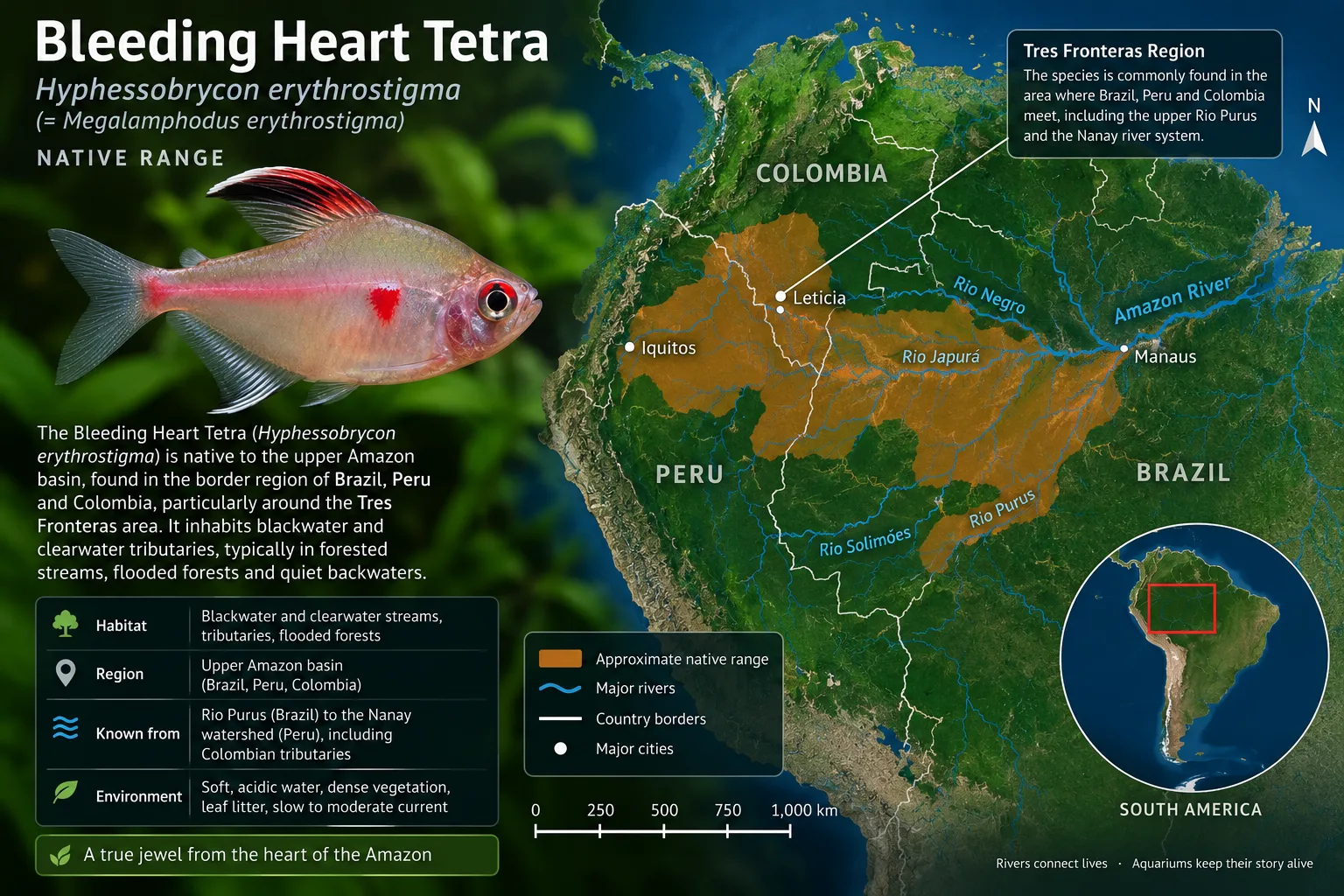
Hyphessobrycon erythrostigma is native to central South America, including river systems in Brazil, Bolivia and Paraguay. Wild fish occur in freshwater habitats where vegetation, shade and submerged structure provide cover and feeding opportunities.
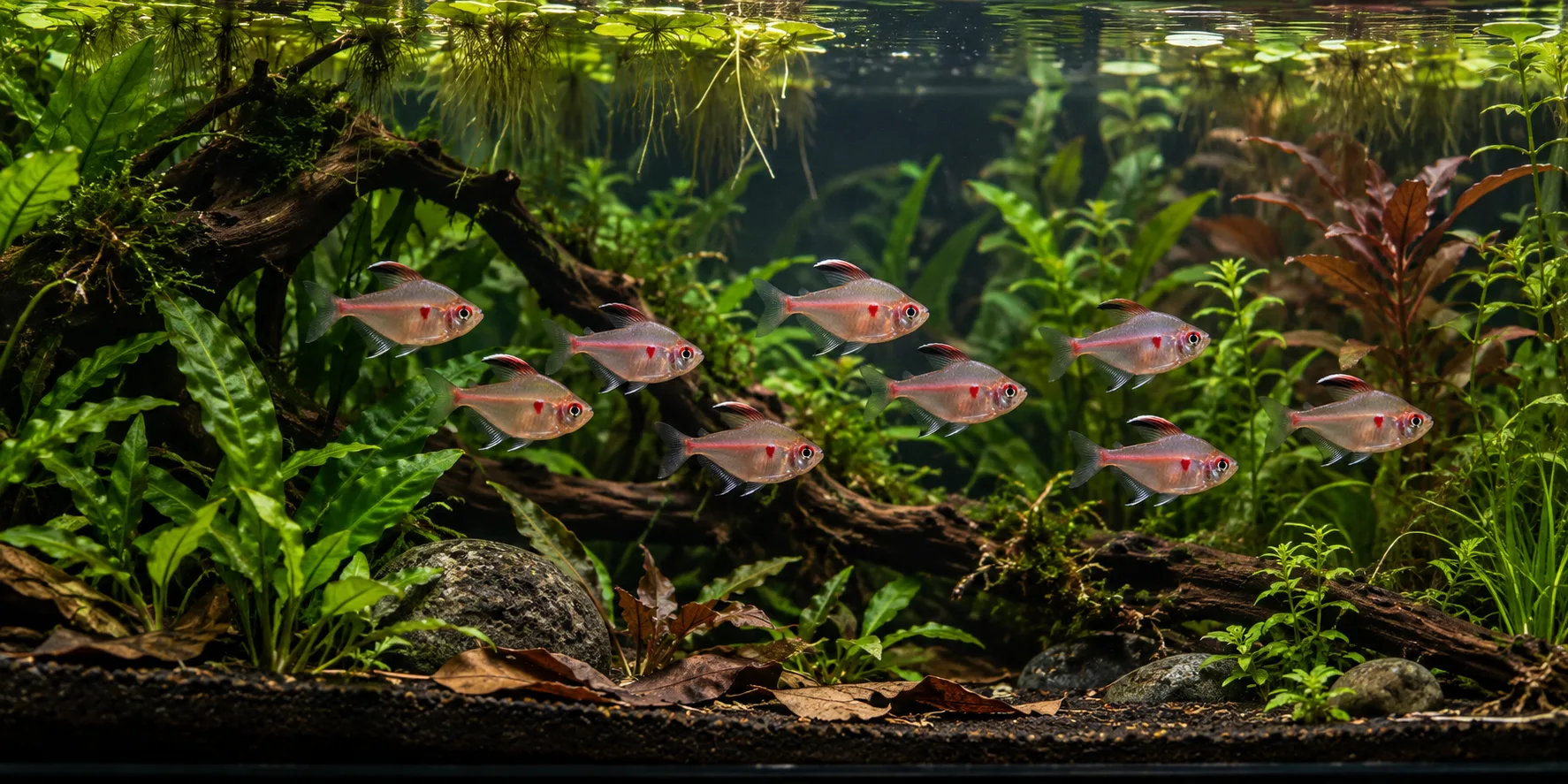
In the aquarium, plants, wood and shaded areas can create a more natural environment while leaving an open swimming lane through the middle of the tank. Captive-bred fish are common in the aquarium trade.
Black skirt tetra tank size & requirements
A 10-gallon (38 L) aquarium is a practical minimum for a small school, but a 20-gallon-long (75 L) aquarium is a better choice because its longer footprint gives active bleeding heart tetras more room to swim. A tight-fitting lid is recommended because startled tetras can jump.
How many bleeding heart tetras in a 5, 10 or 20 gallon tank?
Stock them as a school rather than as isolated fish. A 5-gallon tank is not recommended for a proper group. A 10-gallon tank can work for around six, while a 20-gallon-long aquarium provides a more comfortable footprint for roughly eight to twelve, depending on the rest of the stocking.
| 5 gal (19 L) | Not recommended for a proper school. A 10-gallon or larger aquarium provides better stability and swimming space. |
|---|---|
| 10 gal (38 L) | About 6 bleeding heart tetras — a practical minimum group in a mature, suitably filtered aquarium. |
| 20 gal long (75 L) | 8–12 bleeding heart tetras — a better footprint for natural schooling behaviour and a planted community. |
| 29 gal (110 L) | 10–15 bleeding heart tetras, with room for compatible peaceful tankmates. |
| 55 gal (208 L) | A large school of 15–25 or more can make a striking midwater feature alongside appropriately sized community fish. |
Water parameters
| Temperature | 22–27 °C (72–81 °F) |
|---|---|
| pH | 6.0–7.5 |
| Hardness (GH) | Soft to moderately hard water |
| Filtration turnover | Moderate circulation with good oxygenation and no excessive turbulence |
Use a gentle-to-moderate current, good filtration and regular maintenance. Fine gravel or sand works well, while plants along the rear and sides provide cover without removing the open central swimming area. Moderate lighting is suitable, and floating plants can soften intense light.
Not sure how many litres your aquarium actually holds? Check it with the aquarium volume calculator.
What do bleeding heart tetras eat? Diet & feeding
Black skirt tetras are omnivores and readily accept quality tropical flakes, fine granules and micro-pellets. Feed small portions once or twice daily and offer only what the group can consume quickly. Appropriately sized foods are important because their mouths are relatively small.
For variety, offer frozen or live daphnia, brine shrimp, bloodworms and similar small foods periodically. A varied diet supports growth, colour and breeding condition. Slow-sinking foods work particularly well because the fish actively feed through the middle of the aquarium.
Black skirt tetra tank mates & compatibility
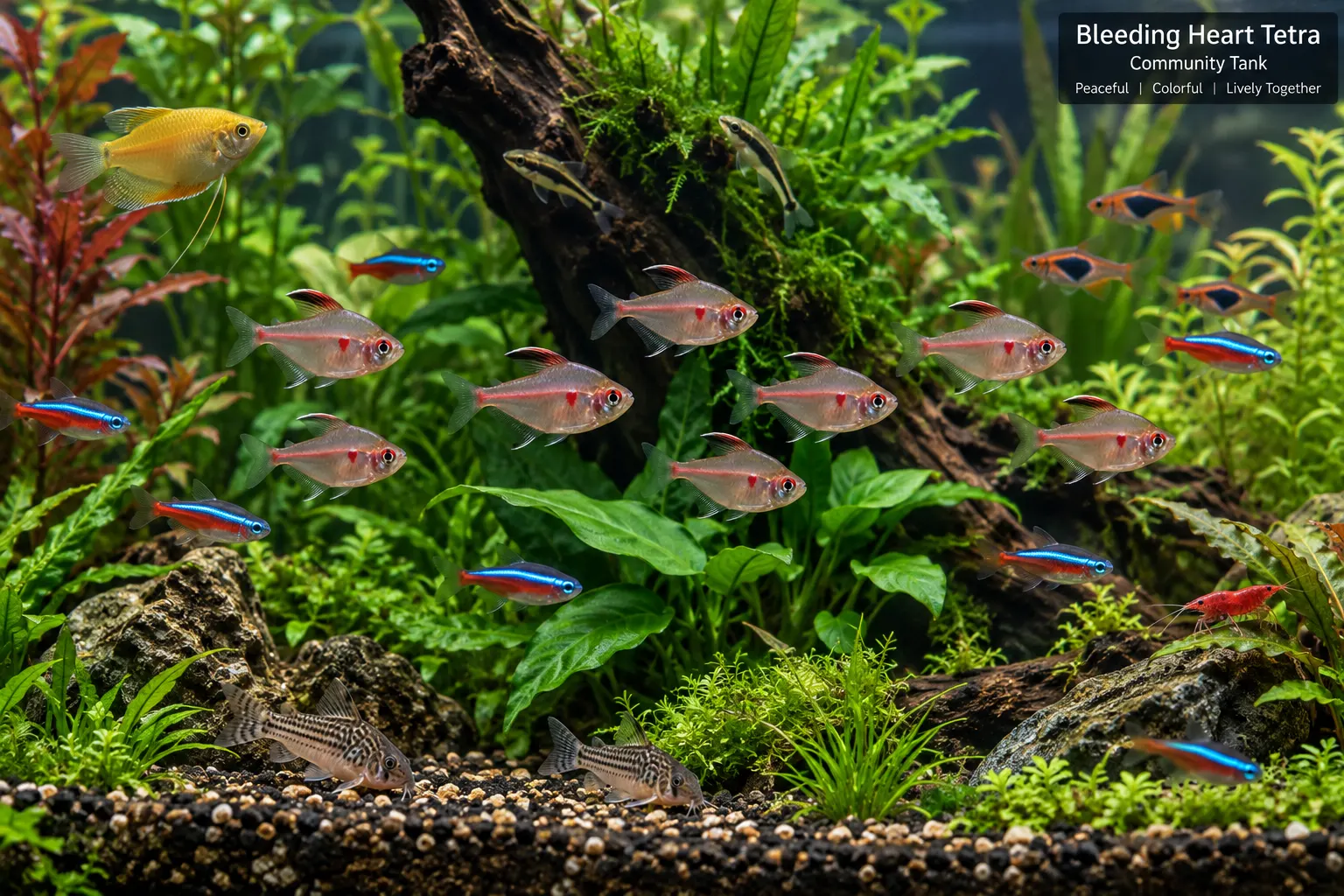
Black skirt tetras are generally peaceful community fish and should be kept in a school. A group of six is a reasonable minimum, while larger groups usually produce more confident social behaviour. Choose tankmates that are peaceful, appropriately sized and comfortable with similar tropical freshwater conditions.
Are bleeding heart tetras aggressive? No. Chasing and displaying within the group can be normal social behaviour. Persistent chasing, hiding, torn fins or obvious stress usually points to an unsuitable community, insufficient space or poor environmental conditions.
Good bleeding heart tetra tank mates
- Other peaceful tetras of similar size and temperament
- Peaceful rasboras with overlapping water requirements
- Corydoras catfish suited to the same temperature range
- Kuhli loaches in mature, appropriately sized aquariums
- Peaceful gouramis where the individual fish and tank size are suitable
- Other calm South American community fish that will not outcompete them for food
- A proper group of bleeding heart tetras — keep them socially rather than singly
Avoid
- Large predatory fish that can swallow or seriously harass small tetras
- Aggressive or highly territorial cichlids
- Very boisterous fish that constantly chase or outcompete the school
- Known fin-nippers, especially with long-fin bleeding heart tetras
- Slow, delicate long-finned fish if the individual tetras show persistent fin-nipping behaviour
How to breed bleeding heart tetras
Black skirt tetras are egg-scattering fish and provide no parental care. Adults may eat eggs, so successful breeding is easier when the eggs can fall away from the adults or when the breeders are removed after spawning.
For a dedicated breeding attempt, use a separate shallow spawning aquarium with clean, soft-to-moderate water, subdued lighting and a spawning mop, fine-leaved plants or mesh that protects the eggs. Condition the breeders with varied live or frozen foods before spawning. After spawning, remove the adults and keep the eggs protected from bright light. Feed newly free-swimming fry suitably tiny first foods before progressing to baby brine shrimp and other appropriately sized foods.
Exact breeding conditions can vary between breeding lines. Stable water quality, careful observation and protecting the eggs from the adults are more important than making abrupt changes to chase a single target value.
Naming confusion & buyer’s notes
Black skirt tetras are usually easy to identify, but trade names can hide the difference between naturally coloured fish, selectively bred forms and artificially coloured fish. The scientific name Hyphessobrycon erythrostigma is the safest way to confirm the species.
Black widow tetra
A common alternative name for Hyphessobrycon erythrostigma. It refers to the same species as the bleeding heart tetra.
Long-fin bleeding heart
A selectively bred long-fin variety of the bleeding heart tetra. The body species remains Hyphessobrycon erythrostigma.
Blue bleeding heart
A trade colour form marketed for a bluish appearance. It is not a separate species.
Dyed / jellybean tetra — welfare flag
Bright dyed, painted or jellybean-style fish are artificially coloured. These methods are a welfare concern, so naturally coloured fish are the preferable purchase.
Buying tip
Choose active fish with clear eyes, intact fins, normal swimming and good body condition. Avoid tanks containing lethargic, visibly injured or obviously diseased fish. Quarantine new arrivals when practical, especially before adding them to an established community.
Black skirt tetra FAQ
- How long do bleeding heart tetras live?
- Black skirt tetras commonly live around 5–7 years in a well-maintained aquarium, with lifespan depending on water quality, nutrition, genetics, tank size and long-term stress levels.
- How big do bleeding heart tetras get?
- Adult bleeding heart tetras generally reach about 5–6 cm (2–2.4 in). Females are often fuller-bodied, especially when carrying eggs, while males tend to look slimmer.
- How many bleeding heart tetras should be kept together?
- Keep at least six together, with a larger group preferable when the aquarium has enough swimming room. A proper school helps distribute social interactions and encourages more confident behaviour.
- How many bleeding heart tetras can live in a 10 or 20 gallon tank?
- A 10-gallon aquarium can work for a small group of around six when it is mature, well filtered and carefully maintained. A 20-gallon-long aquarium is a better choice and can support around eight to twelve with appropriate stocking and maintenance.
- Are bleeding heart tetras aggressive?
- They are generally peaceful community fish, although they are active and may chase one another during normal social behaviour. Persistent fin damage or harassment indicates that the group, tank size or tankmates need attention.
- What do bleeding heart tetras eat?
- They are omnivores that accept quality flakes, fine granules and micro-pellets. Supplementing with frozen or live daphnia, brine shrimp, bloodworms and similar small foods adds variety and supports good condition.
- Do bleeding heart tetras need a heater?
- They are tropical-to-subtropical freshwater fish and should have stable temperatures within their preferred range. In most homes, an adjustable aquarium heater is useful for maintaining consistency.
- Can bleeding heart tetras live with bettas?
- It is possible in some community setups, but it is not a guaranteed combination. Bettas vary individually, while bleeding heart tetras are active schooling fish. A spacious planted tank and careful observation are important if they are combined.
- What are the different bleeding heart tetra varieties?
- Common trade varieties include long-fin bleeding heart tetras, blue bleeding heart tetras and artificially coloured jellybean or disco forms. Long-fin and colour forms are aquarium varieties, while dyed fish are artificially coloured and raise animal-welfare concerns.
- Are dyed jellybean bleeding heart tetras natural?
- No. Bright jellybean, painted or disco colour forms are artificially coloured rather than natural colour morphs. Processes used to create these fish can cause unnecessary stress, injury or health problems, so naturally coloured bleeding heart tetras are the preferable choice.