
Dwarf Rasbora
Boraras micros
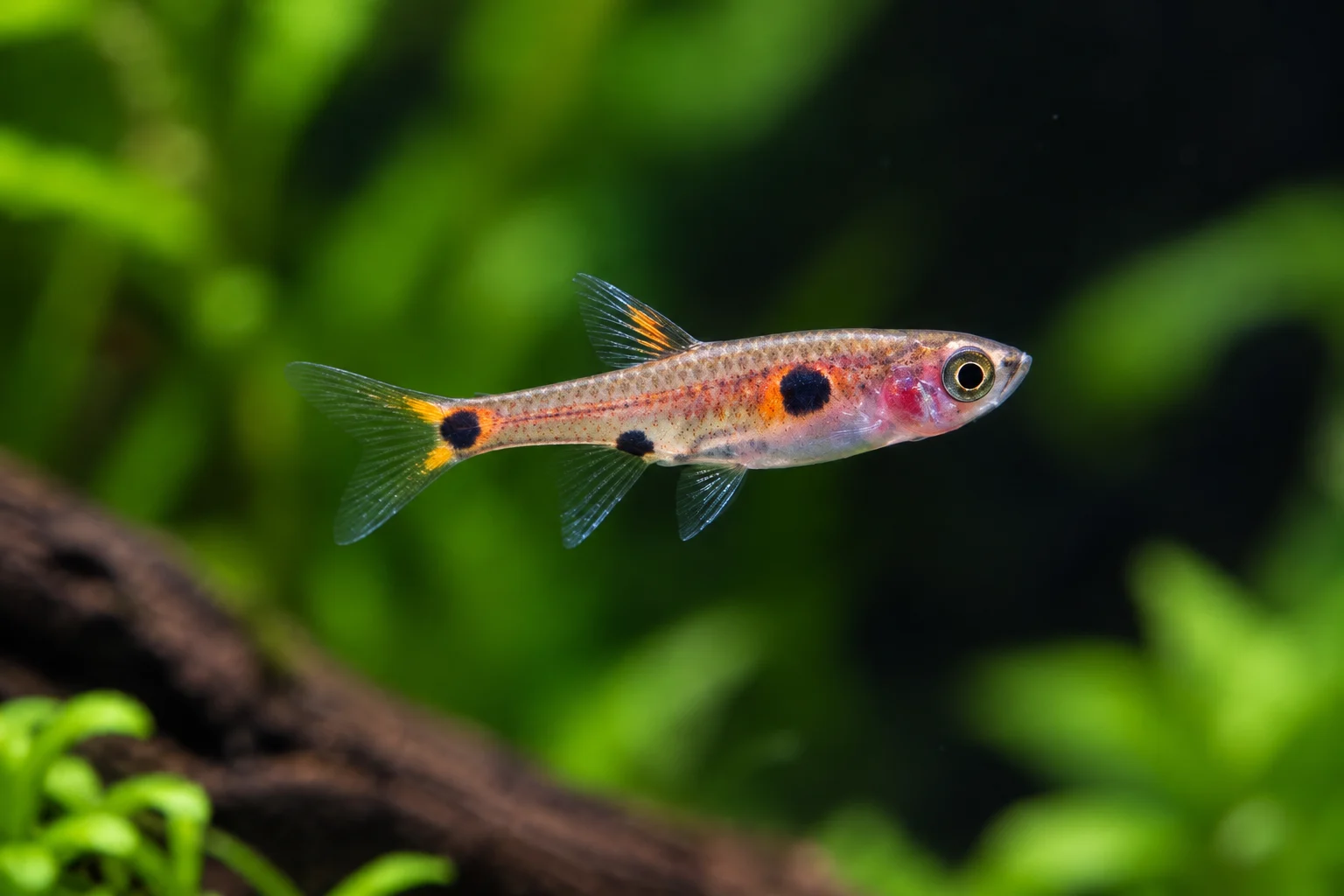
A tiny and peaceful Southeast Asian nano fish — delicate, shy and best appreciated in a calm, heavily planted aquarium with a proper school of its own kind.
Difficulty
Intermediate
Min tank size
38 L / 10 gal
Temperament
Peaceful, shy
Diet type
Micro-predator
Adult size
1.5–2 cm / 0.6–0.8 in
Lifespan
3–5 years
Water type
Freshwater
Dwarf Rasbora at a glance
| Scientific name | Boraras micros |
|---|---|
| Family | Danionidae (danios and rasboras) |
| Origin | Southeast Asia |
| Adult size | Around 1.5–2 cm (0.6–0.8 in) |
| Tank size (min) | 38 L / 10 gal — larger is easier to keep stable |
| Temperature | 22–28 °C (72–82 °F) |
| pH range | 5.0–7.0 |
| Water hardness | Soft to moderately soft water |
| Diet | Tiny live, frozen and dry foods |
| Temperament | Peaceful, shy shoaling fish |
| Lifespan | 3–5 years |
| Care level | Intermediate |
Overview
The Dwarf Rasbora (Boraras micros) is a tiny freshwater fish belonging to the genus Boraras, a group known for containing some of the smallest aquarium fish in the hobby. Its extremely small size and peaceful behaviour make it particularly attractive for carefully designed planted nano aquariums.
Like other members of the genus, Dwarf Rasboras are social fish that feel most secure when kept in groups. A larger school encourages natural behaviour and makes the fish significantly more confident. When kept in small numbers or with overly active tankmates, they may spend much of their time hiding among plants.
Their ideal aquarium is calm, mature and densely planted. Stable water conditions are particularly important because these tiny fish have little tolerance for sudden environmental changes. With proper care, they can become an active and fascinating centerpiece for a peaceful nano aquarium.
Dwarf Rasbora size & lifespan
How big do Dwarf Rasboras get?
Dwarf Rasboras generally remain around 1.5–2 cm (0.6–0.8 inches) long. Their tiny adult size places them among the smallest freshwater fish commonly kept by aquarium hobbyists.
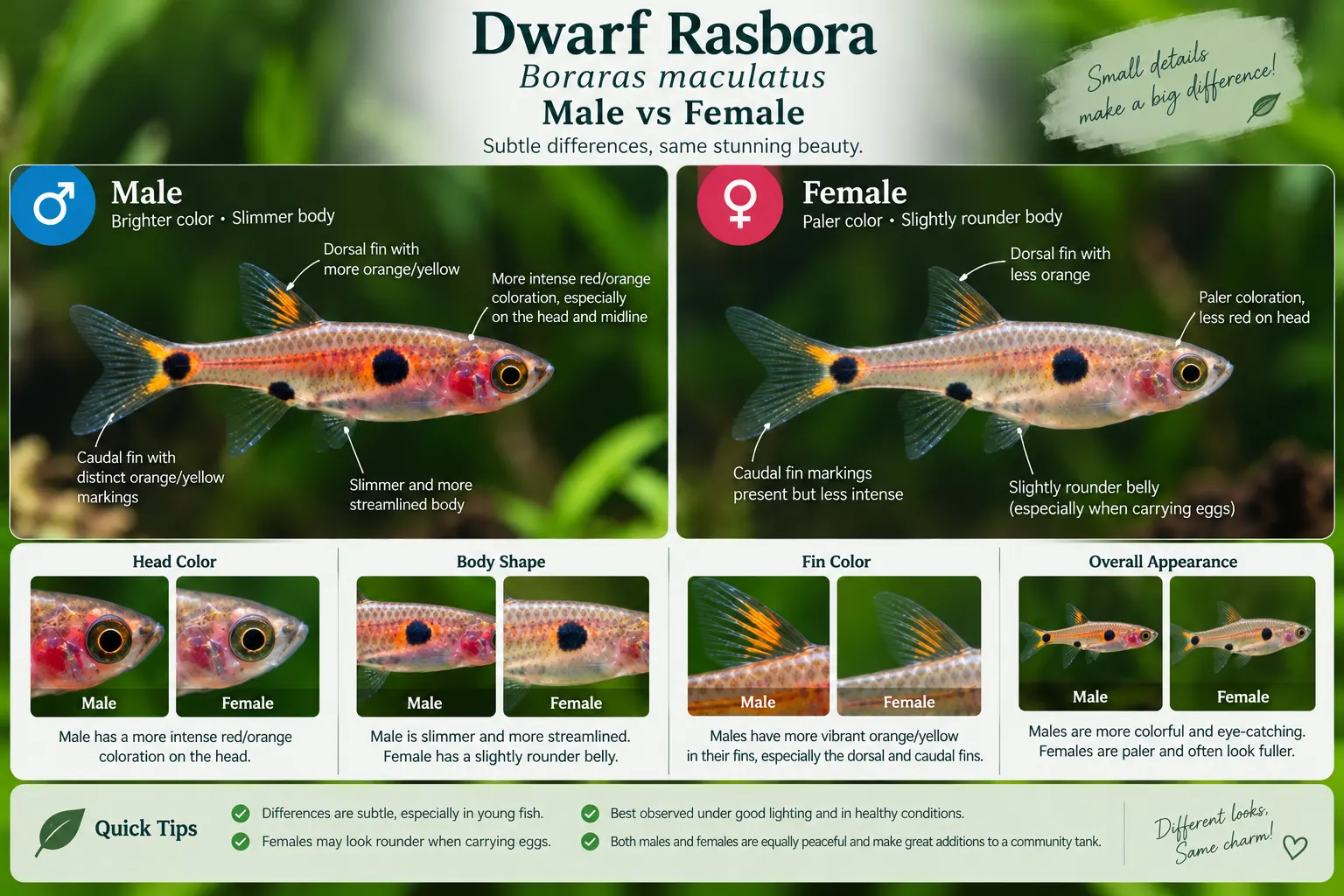
Females are often slightly fuller-bodied, particularly when carrying eggs, while males may appear slimmer and show stronger coloration during social displays.
How long do Dwarf Rasboras live?
A healthy Dwarf Rasbora can live around 3–5 years under good aquarium conditions. Clean water, stable temperature, a varied diet and a calm social environment are the most important factors for long-term success.
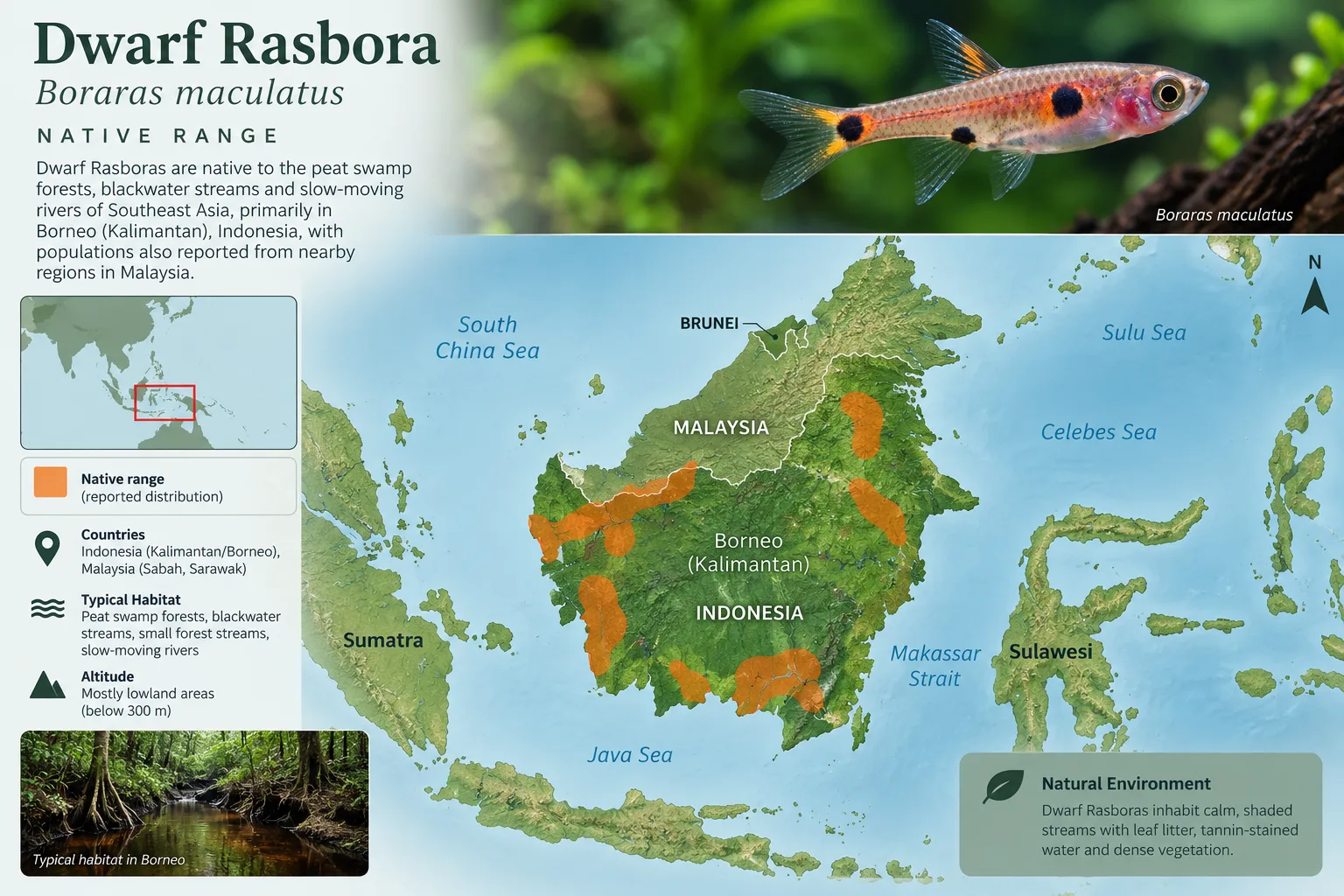
Natural habitat & origin
Boraras micros is native to Southeast Asia and belongs to a group of tiny cyprinid fish associated with warm, calm freshwater environments. These habitats often include shallow streams, swampy areas and slow-moving waters surrounded by dense vegetation.
Natural habitats suitable for small Boraras species are often shaded by surrounding vegetation and contain leaf litter, submerged roots and other natural cover. Water movement is generally gentle, allowing tiny fish to feed and shelter among dense plants.
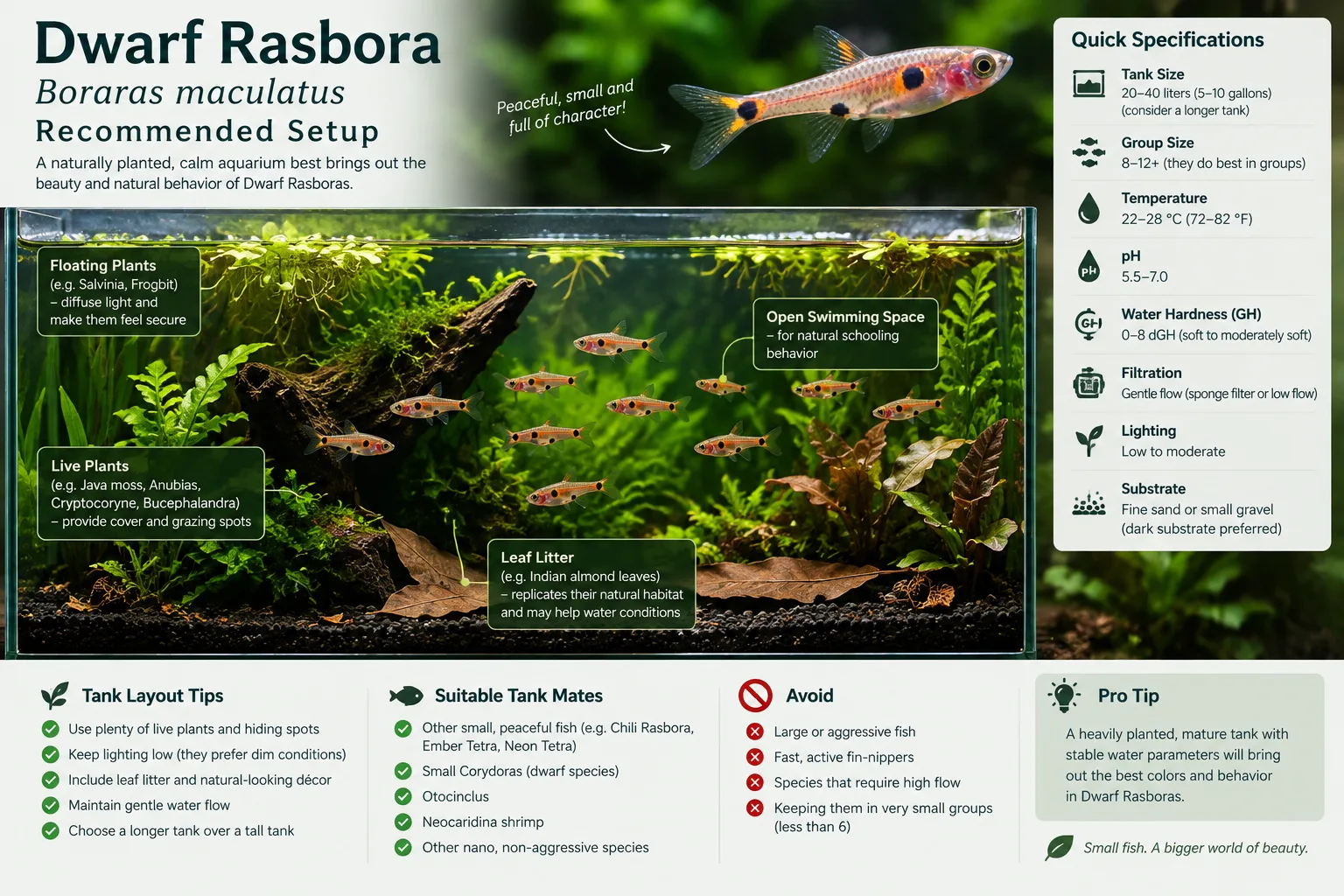
Recreating this type of environment in the aquarium helps Dwarf Rasboras feel secure. Dense planting, floating plants, gentle filtration and subdued lighting usually encourage more confident behaviour.
Dwarf Rasbora tank size & requirements
A 10-gallon (38 L) aquarium is a practical minimum for keeping a proper school of Dwarf Rasboras. Although the fish themselves are tiny, larger water volumes are easier to keep stable and provide more space for plants, cover and natural social behaviour.
Dense planting is strongly recommended. Fine-leaved plants, mosses, floating plants and natural hardscape can all provide security. Leave some open areas for swimming, but avoid exposing the fish in a completely open aquarium.
How many Dwarf Rasboras in a 5, 10 or 20 gallon tank?
Dwarf Rasboras should always be considered as a school rather than individual fish. A 5-gallon aquarium is difficult to maintain consistently and is not ideal for long-term care. A mature 10-gallon aquarium works well for around 8–12 fish, while larger aquariums allow larger schools and more stable conditions.
| 5 gal (19 L) | Not ideal for long-term care because water stability is limited. A larger aquarium is strongly recommended. |
|---|---|
| 10 gal (38 L) | A practical minimum for a school of around 8–12 Dwarf Rasboras in a mature, planted aquarium. |
| 15 gal (57 L) | Excellent for a larger school with dense planting and more stable water conditions. |
| 20 gal (75 L) | Ideal for a large school or a carefully selected peaceful nano community. |
| 29 gal (110 L) | Allows a large natural-looking school alongside compatible tiny community species. |
Water parameters
| Temperature | 22–28 °C (72–82 °F) |
|---|---|
| pH | 5.0–7.0 |
| Hardness (GH) | Soft to moderately soft water, ideally below 10 dGH |
| Filtration turnover | Gentle filtration with low water movement |
Water movement should remain gentle. Strong currents can make it difficult for these tiny fish to swim and feed comfortably. Sponge filters and low-flow filtration systems are excellent choices for planted nano aquariums.
A mature aquarium is preferable to a newly established setup. Stable biological filtration and consistent maintenance are far more important than chasing extremely precise water parameters.
Not sure how many litres your tank actually holds? Check it with the aquarium volume calculator.
What do Dwarf Rasboras eat? Diet & feeding
Dwarf Rasboras require extremely small foods because of their tiny mouths. They are micro-predators and naturally feed on small invertebrates and microscopic organisms found in the water column.
Suitable aquarium foods include crushed flakes, powdered foods, micro pellets, baby brine shrimp, daphnia, cyclops and other appropriately sized live or frozen foods. Variety is important for maintaining healthy growth and natural coloration.
Feed small amounts once or twice daily. In community tanks, watch carefully to ensure the Dwarf Rasboras receive enough food before faster fish consume it.
Dwarf Rasbora tank mates & compatibility
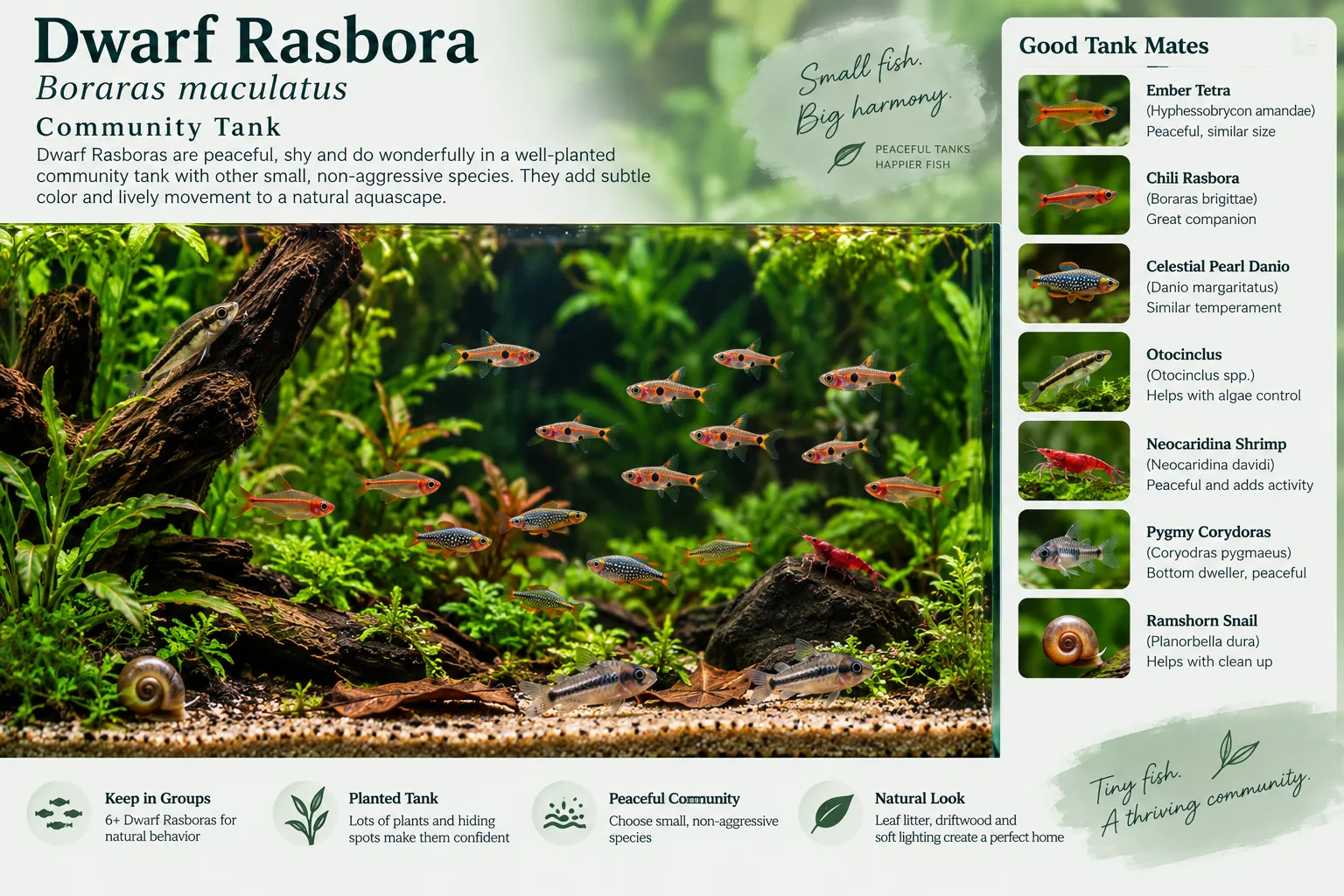
Dwarf Rasboras are extremely peaceful, but their tiny size means they should only be kept with carefully selected companions. Compatibility depends less on whether another fish is technically peaceful and more on whether it is calm enough to avoid intimidating or outcompeting them.
Keep a proper school of at least eight to ten fish. Larger groups usually remain more visible and confident, especially in densely planted aquariums.
Good Dwarf Rasbora tank mates
- Other peaceful Boraras species with similar requirements
- Chili Rasboras
- Phoenix Rasboras
- Exclamation Point Rasboras
- Pygmy Corydoras species in suitable water conditions
- Otocinclus in mature, established aquariums
- Small peaceful freshwater shrimp
- Other tiny, calm nano fish that will not outcompete them for food
Avoid
- Large fish capable of eating Dwarf Rasboras
- Fast and boisterous schooling fish
- Large barbs and active danios
- Aggressive or territorial cichlids
- Predatory fish
- Fish that require strong water movement
How to breed Dwarf Rasboras
Dwarf Rasboras are egg-scattering fish and may breed naturally in mature, densely planted aquariums. However, adults may consume eggs and fry, so a dedicated breeding setup is preferred when the goal is to raise significant numbers of young fish.
Mature females usually appear slightly fuller-bodied than males, while males may appear slimmer and display stronger coloration during social interactions.
A breeding aquarium should contain gentle filtration, soft clean water and dense spawning media such as Java moss or other fine-leaved plants. The fish scatter eggs among vegetation.
The fry are extremely small and initially require microscopic foods such as infusoria or specialized fry foods. As they grow, they can gradually transition to larger foods including baby brine shrimp.
Naming confusion & buyer’s notes
The aquarium trade contains several extremely small species in the genus Boraras, and their similar size and coloration can sometimes cause confusion. Checking the scientific name is the most reliable way to identify the species being sold.
Dwarf Rasbora vs Chili Rasbora
Dwarf Rasbora (Boraras micros) and Chili Rasbora (Boraras brigittae) are separate species within the same genus. Both are tiny nano fish, but their appearance and natural distribution differ.
Other Boraras species
Phoenix Rasboras and Exclamation Point Rasboras are also closely related members of the genus. They may have similar care requirements but should not automatically be treated as the same species.
Small fish, sensitive environment
Their tiny size often leads people to assume they are suitable for any small container. In reality, stable water quality is more important than simply providing enough physical space.
Keep a proper school
Buying only two or three because the fish are tiny is a common mistake. Dwarf Rasboras are social fish and become far more confident when kept in a proper group.
Choose calm tankmates carefully
Even peaceful medium-sized fish can overwhelm tiny Dwarf Rasboras. A successful community aquarium should prioritize calm behaviour, gentle feeding competition and similar environmental requirements.
Dwarf Rasbora FAQ
- How big do Dwarf Rasboras get?
- Dwarf Rasboras are extremely small fish, generally reaching around 1.5–2 cm (0.6–0.8 inches). Their tiny adult size makes them suitable for planted nano aquariums, although they still need stable water and a proper social group.
- How long do Dwarf Rasboras live?
- Dwarf Rasboras can live around 3–5 years when kept in a mature aquarium with stable water quality, appropriate food and low stress. Their small size makes them particularly sensitive to sudden changes in water conditions.
- How many Dwarf Rasboras should be kept together?
- Keep at least eight to ten Dwarf Rasboras together. Larger groups are even better and usually make the fish more confident. A proper school reduces shyness and encourages more natural swimming and social behaviour.
- Can Dwarf Rasboras live in a 5 gallon tank?
- A 5-gallon aquarium is not ideal for long-term care because small water volumes can change quickly and are harder to keep stable. A mature 10-gallon aquarium is a safer minimum for a proper school.
- Are Dwarf Rasboras good for beginners?
- They can be kept by beginners with a properly cycled and mature aquarium, but they are less forgiving than hardy fish such as zebra danios. Their small size means water quality and stability are especially important.
- Are Dwarf Rasboras aggressive?
- No. Dwarf Rasboras are peaceful shoaling fish. Males may occasionally display or chase one another, but serious aggression is uncommon. Their main risk is being intimidated or outcompeted by larger tankmates.
- What do Dwarf Rasboras eat?
- Dwarf Rasboras need very small foods because of their tiny mouths. Suitable foods include crushed flakes, powdered fish food, micro pellets, baby brine shrimp, daphnia, cyclops and other small live or frozen foods.
- Do Dwarf Rasboras need a heater?
- Usually yes unless the aquarium naturally remains within their preferred temperature range of approximately 22–28 °C (72–82 °F). A heater helps maintain stable temperatures, which is more important than allowing frequent fluctuations.
- Can Dwarf Rasboras live with shrimp?
- Yes. Their tiny size and peaceful behaviour make them suitable companions for many freshwater shrimp species. Adult shrimp are generally safe, although extremely small shrimp fry may occasionally be eaten.
- Why are my Dwarf Rasboras hiding?
- Hiding usually happens when the fish are stressed, kept in too small a group, housed with active tankmates or placed in an aquarium with little plant cover. A larger school and dense planting usually make them much more confident.