
Giant Danio
Devario aequipinnatus
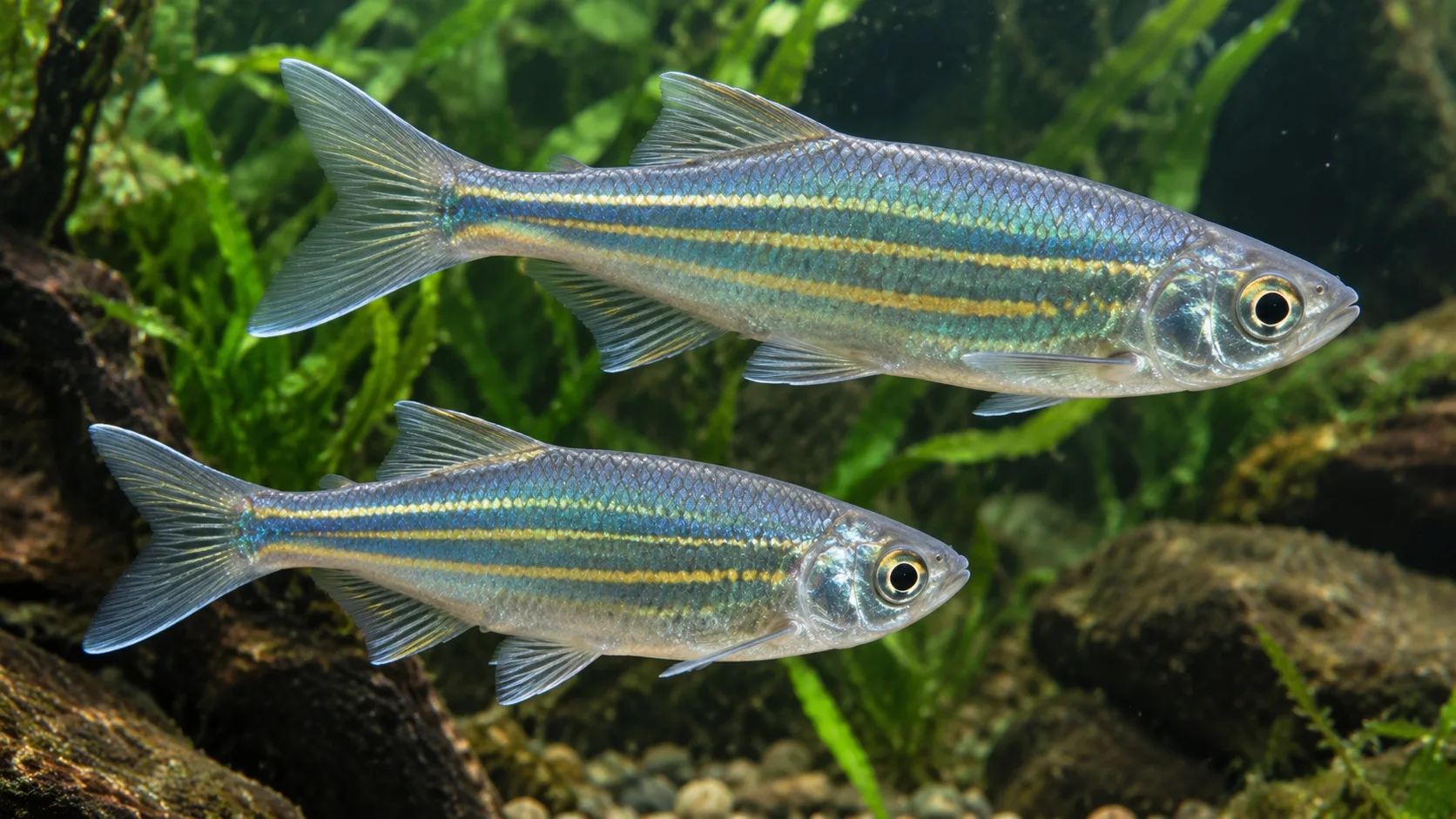
A large, lightning-fast schooling fish with striking blue markings, endless energy and an appetite for open swimming space.
Difficulty
Beginner–Intermediate
Min tank size
280 L / 75 gal
Temperament
Peaceful, very active
Diet type
Omnivore
Adult size
10–15 cm / 4–6 in
Lifespan
5–7 years
Water type
Freshwater
Giant danio at a glance
| Scientific name | Devario aequipinnatus (McClelland, 1839) |
|---|---|
| Family | Danionidae (danios) |
| Origin | South and Southeast Asia |
| Adult size | 10–15 cm (4–6 in) |
| Tank size (min) | 280 L / 75 gal — larger is strongly recommended |
| Temperature | 22–26 °C (72–79 °F) |
| pH range | 6.0–8.0 |
| Water hardness | 5–20 dGH |
| Diet | Omnivore — pellets, flakes, insects, live and frozen foods |
| Temperament | Peaceful but extremely active and boisterous |
| Lifespan | 5–7 years |
| Care level | Beginner to Intermediate |
Overview
The giant danio (Devario aequipinnatus) is one of the largest and most energetic members of the danio family commonly kept in freshwater aquariums. Its streamlined silver body, blue-green markings and powerful swimming style make it an impressive fish, but its name can be misleading: this is not simply an oversized zebra danio. It belongs to a different genus and has significantly different space requirements.
Giant danios are peaceful schooling fish, but they are constantly in motion. They race through the upper and middle levels of the aquarium, often swimming against filter currents and exploring every open area. This behaviour makes them unsuitable for small aquariums. Their most important care requirements are a large, long tank, strong filtration, high oxygen levels and a proper school of at least six fish.
When given enough space, giant danios are hardy, adaptable and excellent additions to large active community aquariums. They are particularly suitable for aquarists who want a constantly moving, visible schooling fish rather than a slow or sedentary species.
Giant danio size & lifespan
How big do giant danios get?
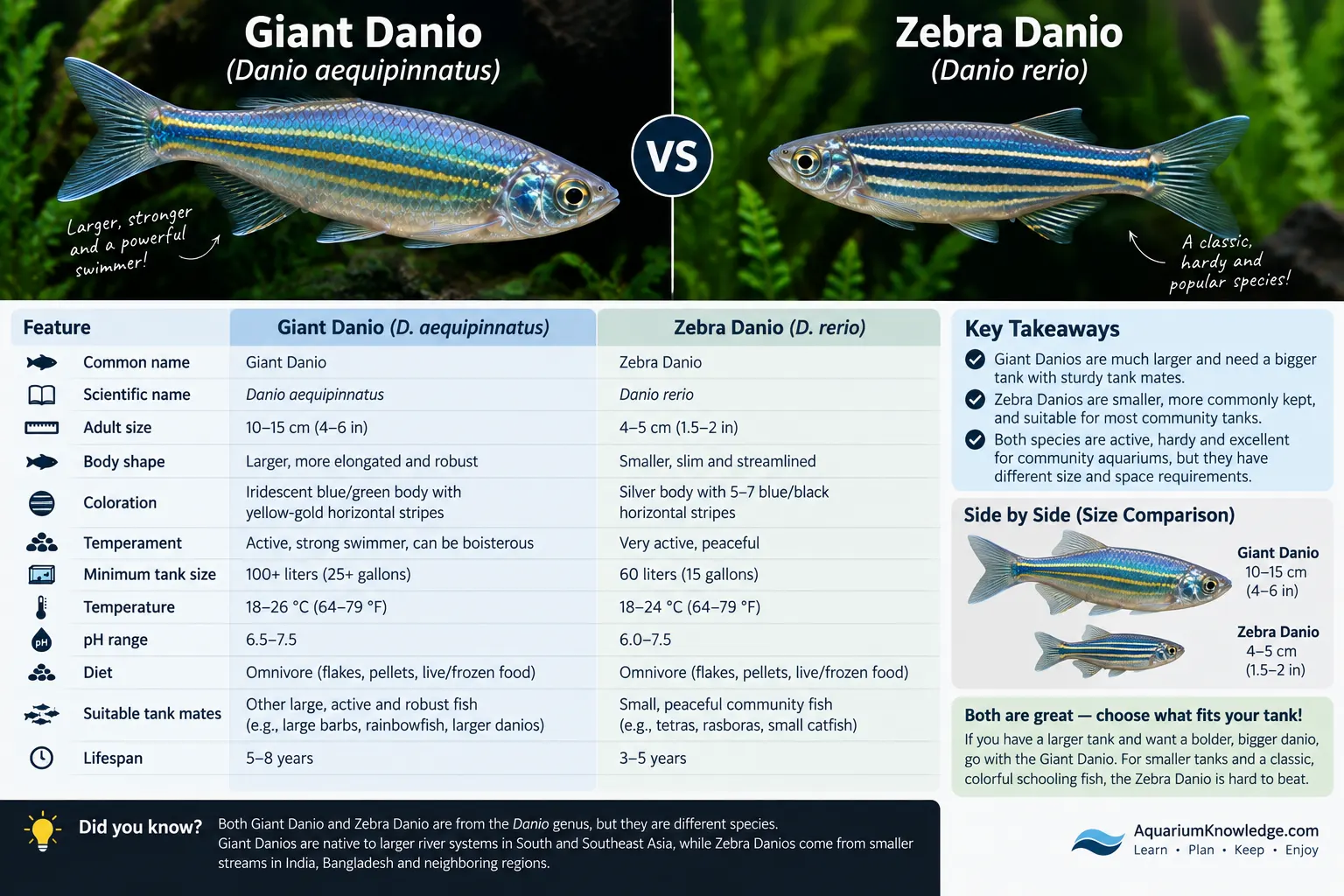
Giant danios typically reach around 10–15 cm (4–6 inches) in aquariums. Their body is long, streamlined and muscular, built for fast swimming in open water. They are dramatically larger than zebra danios, which usually reach only around 4–5 cm.
Because giant danios remain constantly active throughout their adult lives, tank size should be determined by swimming behaviour rather than body length alone. A fish measuring 12 cm but capable of rapid, sustained movement requires considerably more space than a slower fish of the same size.
How long do giant danios live?
Giant danios generally live around 5–7 years in a well-maintained aquarium. Clean water, strong oxygenation, adequate swimming space and a varied diet are important for achieving their full lifespan.
Natural habitat & origin
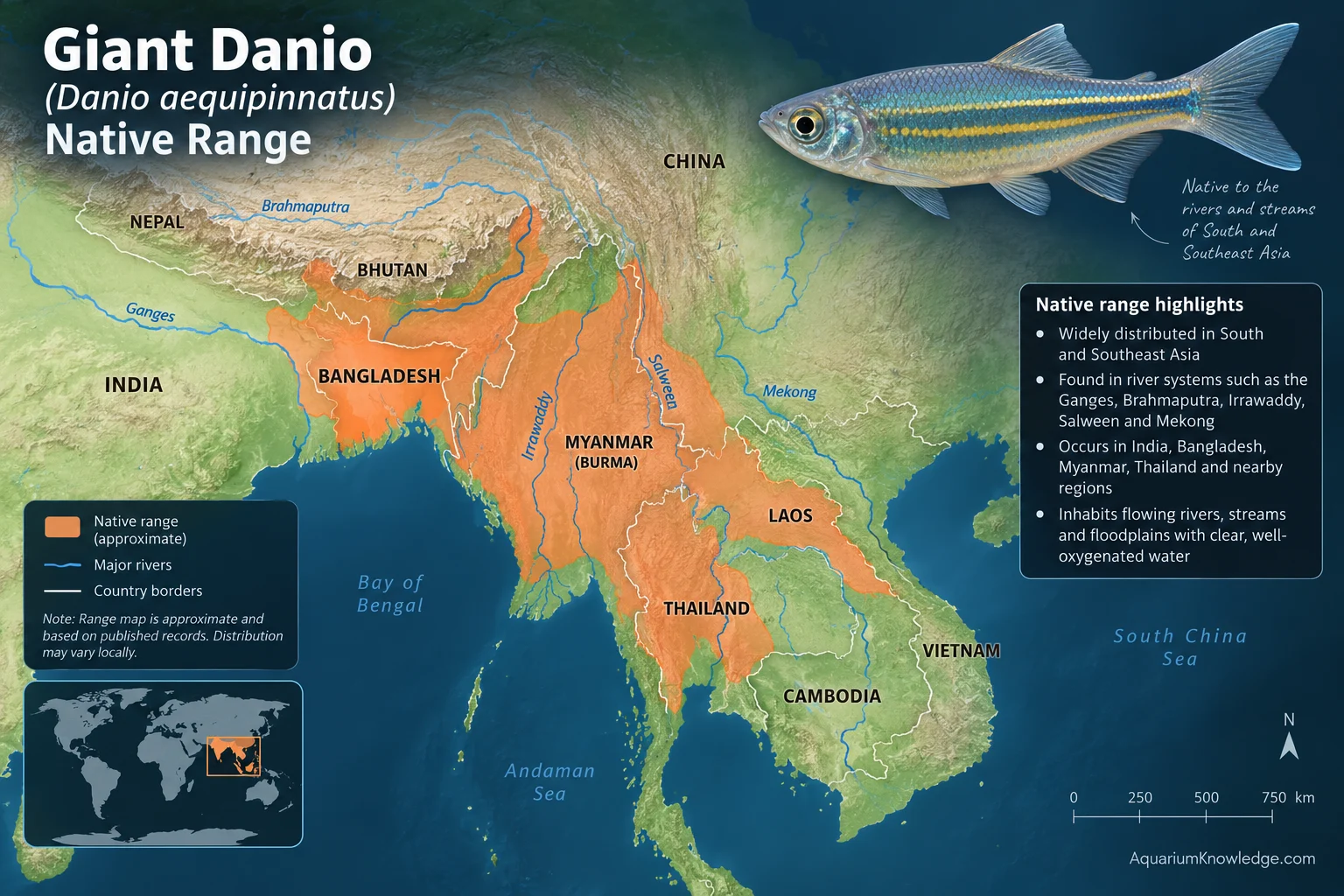
Devario aequipinnatus is native to parts of South and Southeast Asia. Wild populations occur in river systems and freshwater habitats associated with flowing streams, tributaries and other well-oxygenated waters.
In nature, giant danios are adapted to active environments with moving water and abundant oxygen. Their streamlined body and powerful swimming ability reflect this lifestyle. Aquarium setups should therefore avoid stagnant conditions and provide moderate to strong circulation without turning the entire aquarium into an uncontrollable current.
Their natural habitats can vary seasonally, so captive-bred giant danios are relatively adaptable to normal freshwater aquarium conditions. Stability and water quality are more important than attempting to perfectly reproduce one exact wild habitat.
Giant danio tank size & requirements
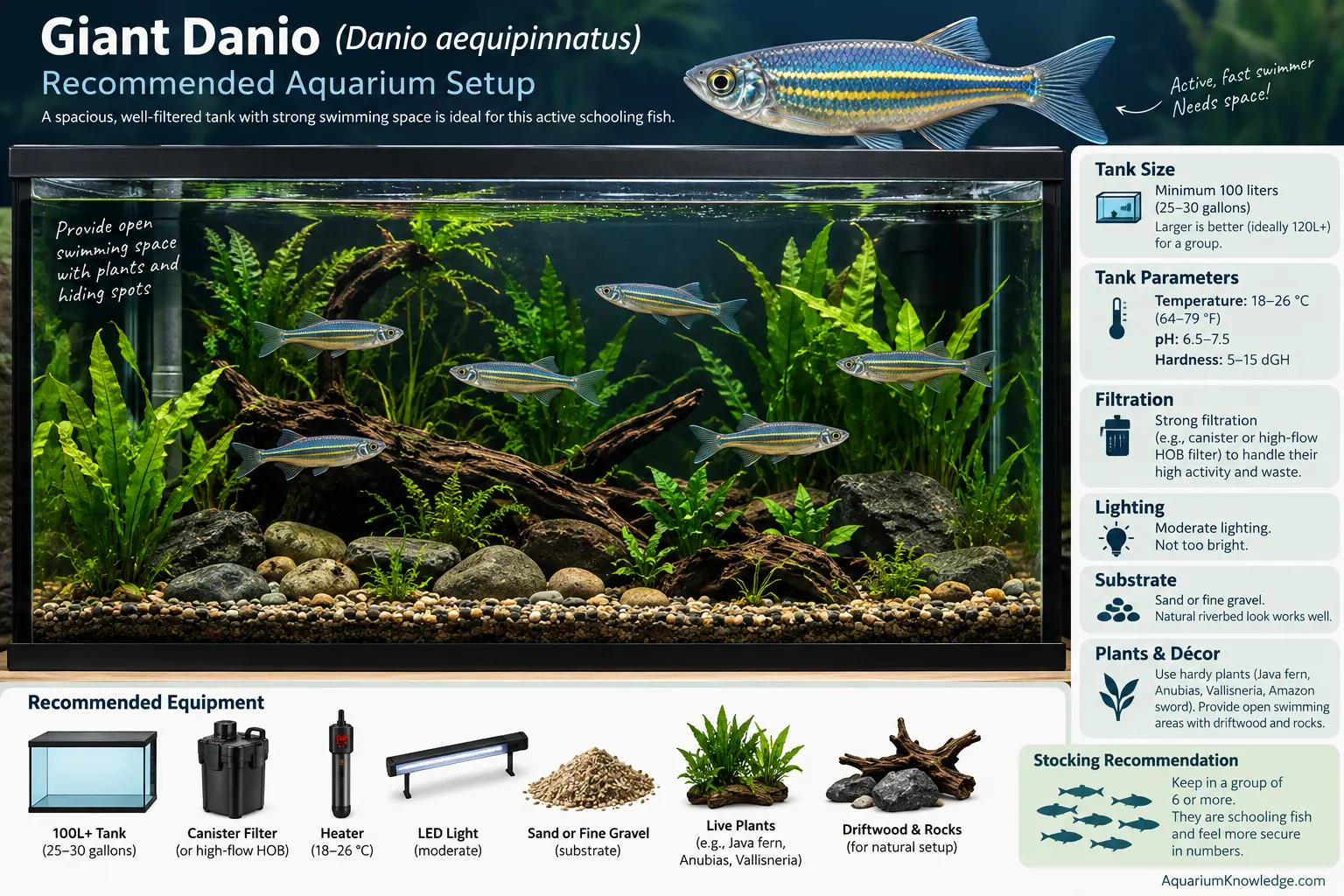
Giant danios need substantially more space than most aquarium danios. A 75-gallon (280 L) aquarium is a practical minimum for a school of six, but larger is always better. Tank length is more important than height because these fish are extremely fast horizontal swimmers.
A long aquarium provides room for the school to accelerate, change direction and establish natural shoaling behaviour. Small tanks may physically hold giant danios for a while, especially juveniles, but do not provide adequate long-term swimming space.
Giant danio tank size guide
| 20 gal (75 L) | Not recommended — far too small for the adult size and swimming behaviour of giant danios. |
|---|---|
| 40 gal (150 L) | Still too small for a proper school. The tank lacks sufficient horizontal swimming space. |
| 55 gal (208 L) | Borderline and generally not recommended for a full adult school of giant danios. |
| 75 gal (280 L) | Practical minimum for a school of six, preferably in a long aquarium with plenty of open swimming space. |
| 125 gal (470 L) | Excellent for a large school of giant danios with compatible community fish. |
Water parameters
| Temperature | 22–26 °C (72–79 °F) |
|---|---|
| pH | 6.0–8.0 |
| Hardness (GH) | 5–20 dGH |
| Filtration | Strong filtration, high oxygenation and moderate to strong water movement |
Use strong, reliable filtration and maintain good surface agitation for oxygen exchange. A moderate to strong current is beneficial, particularly in large aquariums. Leave plenty of open water for swimming while placing plants, rocks and driftwood around the edges of the aquarium.
Giant danios are excellent jumpers, so a secure lid is essential. Their speed means they can easily launch themselves through small gaps around filters or aquarium equipment.
Not sure how many litres your tank actually holds? Check it with the aquarium volume calculator.
What do giant danios eat? Diet & feeding
Giant danios are omnivorous and enthusiastic feeders. In aquariums, quality pellets or flakes can form the foundation of their diet, supplemented regularly with live or frozen foods such as bloodworms, brine shrimp, daphnia and insect larvae.
Their active metabolism means they appreciate a varied diet. Small insects and insect-based foods are particularly suitable. Feed once or twice daily, offering only what the fish can consume within a few minutes.
Giant danios are extremely fast feeders and can easily outcompete slower fish. In community tanks, spread food across multiple areas or use a combination of floating and sinking foods to ensure all inhabitants receive enough nutrition.
Giant danio tank mates & compatibility
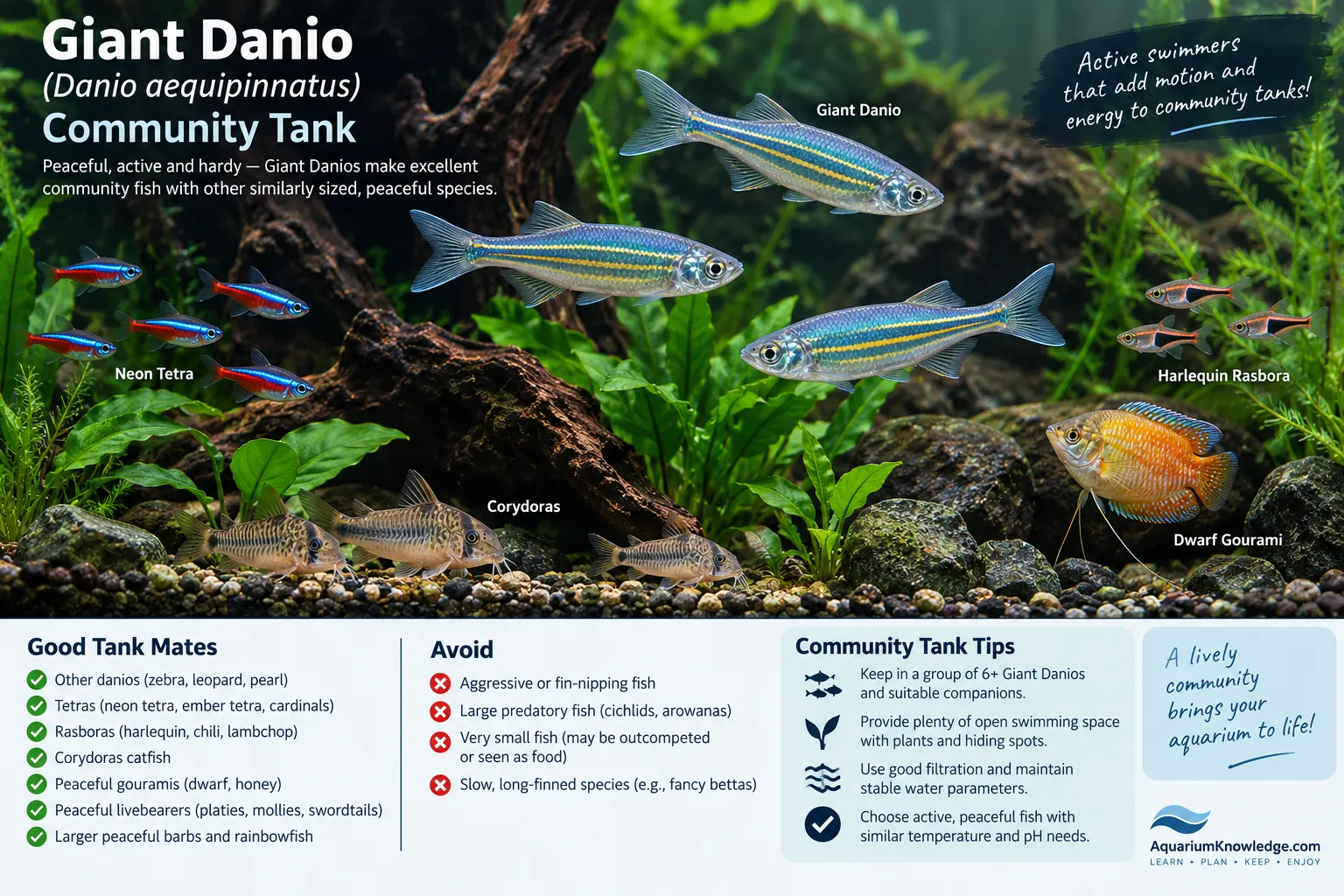
Giant danios are peaceful but should not be considered gentle or quiet community fish. Their constant speed and activity can overwhelm timid species. The best tankmates are robust, similarly-sized fish that tolerate movement and enjoy comparable water conditions.
Keep giant danios in a school of at least six. A proper group helps direct their activity toward each other and creates more natural shoaling behaviour. Keeping only one or two can result in nervous or overly dominant behaviour.
Good giant danio tank mates
- Other large, active danio species
- Rainbowfish of similar size and activity level
- Larger peaceful barbs
- Robust rasboras in sufficiently large aquariums
- Medium-sized peaceful gouramis that tolerate active tankmates
- Corydoras catfish in large community aquariums
- Loaches suited to the same water conditions
- Bristlenose plecos and other peaceful bottom-dwelling fish
- Other peaceful fish large enough not to be intimidated by their activity
Avoid
- Small nano fish that may be stressed or outcompeted for food
- Slow-moving fish that dislike constant activity
- Long-finned fish vulnerable to occasional fin-nipping
- Aggressive cichlids and predatory fish
- Very small shrimp and tiny fry
- Fish requiring very warm or stagnant water conditions
How to breed giant danios
Giant danios are egg-scattering fish and provide no parental care. Breeding is possible in aquariums but requires significantly more space than breeding smaller danio species. Adults will readily eat eggs, so eggs need to be protected after spawning.
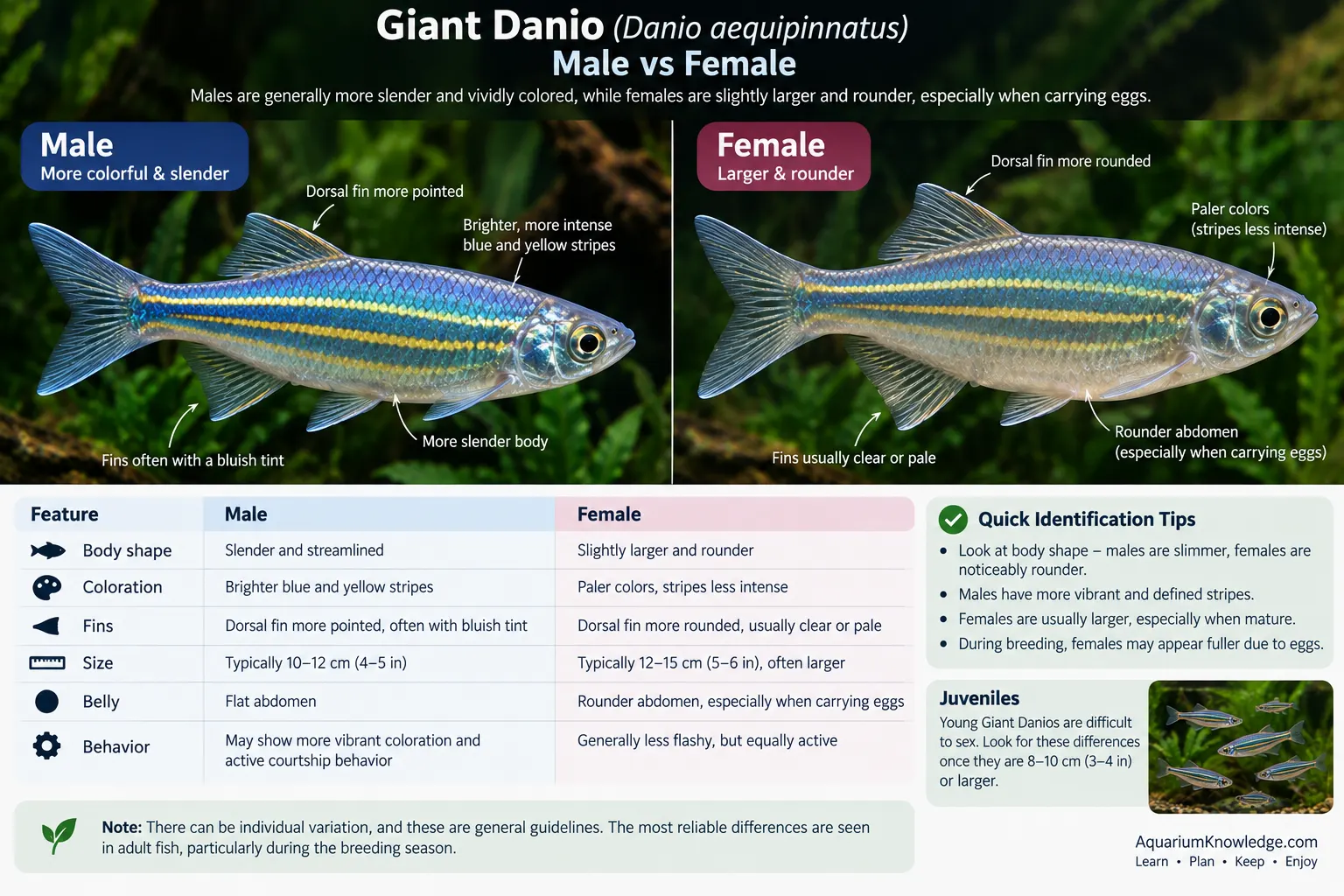
Females are generally deeper-bodied and rounder, especially when carrying eggs. Males tend to remain slimmer and may appear more intensely coloured when mature and conditioned.
For breeding, use a large dedicated spawning aquarium with clean, well-oxygenated water and plenty of room for the fish to swim. Fine-leaved plants, spawning mops or a protective mesh can help eggs fall out of reach of the adults. Condition the breeding group with high-quality live and frozen foods before spawning.
After spawning, remove the adults to prevent egg predation. The eggs hatch within a few days depending on temperature, and the fry can initially be fed infusoria or commercial fry food before progressing to newly hatched brine shrimp and other appropriately sized foods.
Naming confusion & buyer’s notes
The name "giant danio" creates confusion because it sounds like a large version of the zebra danio. It is not. Before buying, make sure you understand the differences:
Giant danio vs zebra danio
Giant danios are Devario aequipinnatus, while zebra danios are Danio rerio. They belong to the same family but different genera. Giant danios grow two to three times larger and require dramatically more swimming space.
Juveniles grow quickly
Young giant danios are often sold at only a few centimetres long, which can make them appear suitable for smaller tanks. Do not buy them based on juvenile size — plan for their adult size and extremely active behaviour.
Tank length matters
A tall aquarium with the same water volume as a long aquarium is less suitable. Giant danios use horizontal space constantly, so choose the longest practical aquarium footprint.
Not a nano fish
Despite being sold alongside smaller danio species, giant danios are large, powerful schooling fish. They are best suited to large community aquariums rather than typical beginner nano tanks.
Giant danio FAQ
- How big do giant danios get?
- Giant danios typically reach around 10–15 cm (4–6 inches) in aquariums. Their size, muscular body and extremely active swimming behaviour make them significantly larger and more demanding than zebra danios.
- How long do giant danios live?
- Giant danios commonly live around 5–7 years when kept in a large, stable aquarium with good water quality, plenty of swimming space and a varied diet.
- How many giant danios should be kept together?
- Keep at least six giant danios together. They are highly active shoaling fish and become more confident and display more natural behaviour when kept in a proper group.
- What size tank do giant danios need?
- A 75-gallon (280 L) aquarium is a practical minimum for a school of giant danios. Because they are powerful, fast horizontal swimmers, tank length is especially important. Larger aquariums provide significantly better conditions.
- Are giant danios aggressive?
- Giant danios are generally peaceful, but they are extremely energetic and boisterous. Their constant movement can stress slow or timid fish, and they may occasionally nip fins. They are best kept with active, robust tankmates.
- Can giant danios live with zebra danios?
- They can sometimes coexist in a sufficiently large aquarium, but giant danios are much larger and more boisterous than zebra danios. A very large tank and careful stocking are required. In most average home aquariums, it is better to keep each species separately.
- Are giant danios good community fish?
- Yes, in the right aquarium. Giant danios are peaceful but need large, active community tanks. Their ideal companions are similarly sized, fast-moving and robust fish that enjoy well-oxygenated water.
- What do giant danios eat?
- Giant danios are omnivores. A quality pellet or flake food should form the staple diet, supplemented with insects, bloodworms, brine shrimp, daphnia and other live or frozen foods.
- Do giant danios need a heater?
- Usually yes in most homes. Giant danios prefer temperatures around 22–26 °C (72–79 °F). A heater helps maintain stable conditions when room temperatures fall outside that range.
- Are giant danios really giant zebra danios?
- No. Despite the similar common names, giant danios are a different species and belong to a different genus. The zebra danio is Danio rerio, while the giant danio is Devario aequipinnatus. Giant danios grow much larger and require substantially bigger aquariums.